Organic Tencel Socks vs Cotton Socks: Which Is More Eco-Friendly?

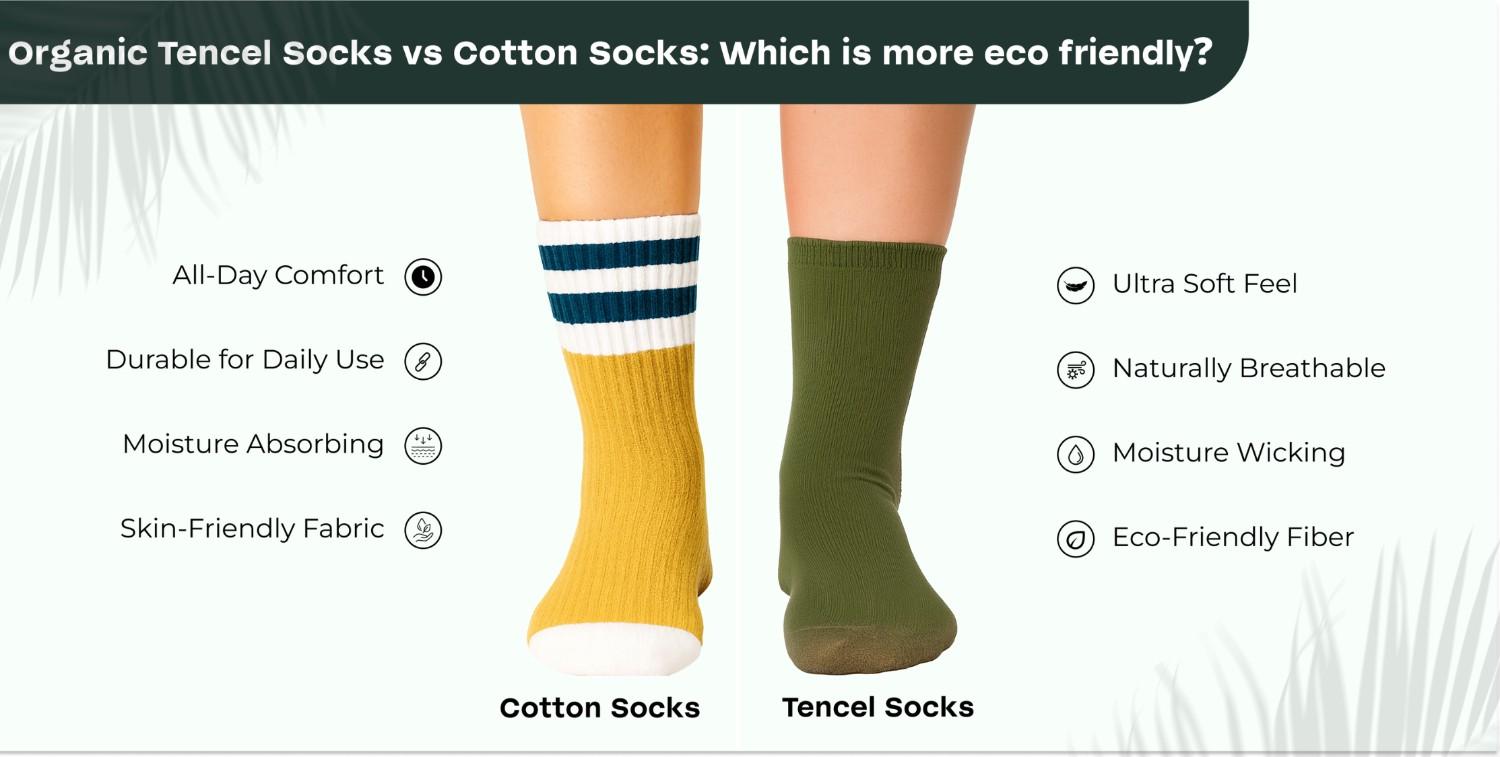
When it comes to sustainable fashion, socks may seem like a small detail — but they make a big environmental impact. At Texcyle, we often hear customers asking whether Organic Tencel socks are truly more eco-friendly than traditional cotton socks. As a responsible tencel socks manufacturer, we believe in transparency and informed choices. Let’s break it down in a practical, easy-to-understand way.

1. Raw Material Source Comparison

Cotton, even organic cotton, requires significant land and water. Conventional cotton farming can also involve pesticides and heavy irrigation.

Tencel™, derived from sustainably sourced wood pulp (usually eucalyptus), is produced using a closed-loop process that recycles water and solvents. This reduces waste and environmental harm significantly. From a raw material perspective, Tencel often has the edge in resource efficiency.

As a tencel socks manufacturer, we prioritize responsibly sourced fibers that reduce long-term ecological strain.

2. Moisture Management in Everyday Wear

Moisture control is crucial for foot hygiene. Tencel fibers naturally wick moisture away from the skin and release it quickly. Cotton absorbs moisture but tends to hold onto it, which can leave feet feeling damp.

For humid climates or long office hours, Tencel socks generally keep feet drier and fresher.

3. Odor Control in Socks

Because Tencel manages moisture efficiently, it creates a less favorable environment for odor-causing bacteria. Cotton, when wet, can promote bacterial growth. This makes Tencel socks a strong choice for people who experience sweaty feet. Many buyers working with a tencel socks manufacturer in Russia are increasingly shifting toward Tencel blends for better odor resistance in colder yet moisture-prone environments.

4. Blister Prevention & Friction Control

Blisters are usually caused by friction combined with moisture. Since Tencel fibers are smoother than cotton fibers, they reduce surface friction against the skin. The added moisture-wicking ability further lowers blister risk.

For individuals who walk long distances or travel frequently, this difference becomes noticeable.

5. Breathability for Hot & Humid Climates
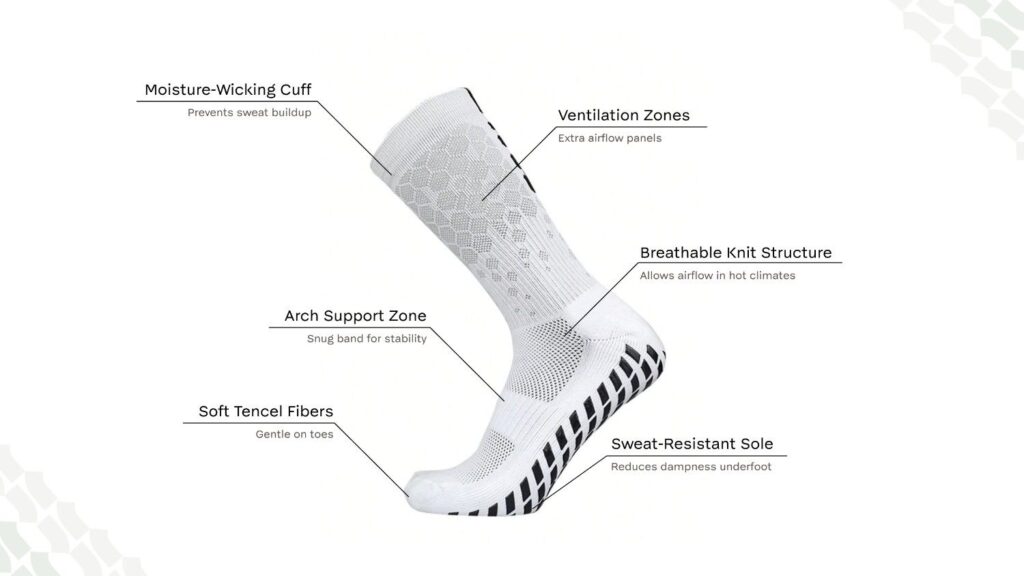
Breathability plays a major role in comfort. Tencel fibers allow better airflow due to their microfibril structure. Cotton is breathable too, but once saturated with sweat, airflow reduces.

In tropical and humid regions, Tencel often provides a cooler, lighter wearing experience.

6. Durability After Multiple Washes

Cotton socks may lose shape, thin out, or become rough after repeated washing. Tencel fibers maintain smoothness and structural integrity longer.

As a professional tencel socks manufacturer, Texcyle engineers blends that enhance durability without compromising softness. Longer-lasting socks directly contribute to sustainability because fewer replacements are needed.

7. Stretch & Fit Retention

Fit retention matters for daily wear. Cotton fibers can weaken over time, especially when exposed to heat drying. Tencel blends, when combined with elastane, retain elasticity and shape more effectively.

Better fit retention also means improved comfort throughout the day.

8. Skin Sensitivity & Allergy Friendliness

Tencel is naturally hypoallergenic and gentle on sensitive skin. Its smooth fiber surface minimizes irritation. Cotton is also skin-friendly, but rougher fibers may irritate extremely sensitive skin after repeated washing.

People with eczema or skin sensitivity often prefer Tencel-based socks.

9. Drying Time After Washing

Tencel dries faster than cotton because it releases moisture more efficiently. Cotton absorbs and retains water, leading to longer drying times.

Faster drying not only adds convenience but also reduces energy consumption if machine drying is used.

10. Impact of Sock Lifespan on Sustainability

Sustainability isn’t just about raw materials — it’s also about longevity. A sock that lasts longer reduces waste generation and replacement frequency.

When produced responsibly by a tencel socks manufacturer, Tencel socks often provide a longer lifecycle compared to traditional cotton socks. Even distributors working with a tencel socks manufacturer in Russia are recognizing that durability significantly improves overall environmental impact.

Which Is More Eco-Friendly?

Both Organic Cotton and Organic Tencel have sustainable qualities. However, Tencel generally:

  • Uses less water in processing
  • Offers better moisture and odor control
  • Lasts longer
  • Dries faster
  • Feels softer on sensitive skin

For brands and bulk buyers seeking modern sustainable alternatives, partnering with an experienced tencel socks manufacturer like Texcyle ensures high-performance, eco-conscious solutions.

FAQs:

1. Are Organic Tencel socks better than cotton socks for sweaty feet?

Yes. Tencel manages moisture more efficiently, keeping feet drier and reducing odor buildup.

2. Which socks last longer — Tencel or cotton?

Tencel socks typically maintain structure and softness longer than cotton socks when properly blended and manufactured.

3. Do Tencel socks shrink less than cotton socks?

Yes. Tencel fibers are more dimensionally stable and generally shrink less compared to cotton.

4. Are Organic Tencel socks suitable for sports activities?

Absolutely. Their moisture-wicking and friction-reducing properties make them ideal for light sports and active lifestyles.

5. Which socks are more comfortable for daily office wear?

For long hours, Tencel socks often provide better breathability, softness, and odor control, making them highly comfortable for office wear.

If you’re looking for sustainable, high-performance sock solutions, connect with Texcyle — your trusted tencel socks manufacturer.

📩 Email us at info@texcyle.co
📞 Call Us Today +917982201014
Leave a Reply

Your email address will not be published. Required fields are marked *

When it comes to sustainable fashion, socks may seem like a small detail — but they make a big environmental impact. At Texcyle, we often hear customers asking whether Organic Tencel socks are truly more eco-friendly than traditional cotton socks. As a responsible tencel socks manufacturer, we believe in transparency and informed choices. Let’s break it down in a practical, easy-to-understand way.

1. Raw Material Source Comparison

Cotton, even organic cotton, requires significant land and water. Conventional cotton farming can also involve pesticides and heavy irrigation.

Tencel™, derived from sustainably sourced wood pulp (usually eucalyptus), is produced using a closed-loop process that recycles water and solvents. This reduces waste and environmental harm significantly. From a raw material perspective, Tencel often has the edge in resource efficiency.

As a tencel socks manufacturer, we prioritize responsibly sourced fibers that reduce long-term ecological strain.

2. Moisture Management in Everyday Wear

Moisture control is crucial for foot hygiene. Tencel fibers naturally wick moisture away from the skin and release it quickly. Cotton absorbs moisture but tends to hold onto it, which can leave feet feeling damp.

For humid climates or long office hours, Tencel socks generally keep feet drier and fresher.

3. Odor Control in Socks

Because Tencel manages moisture efficiently, it creates a less favorable environment for odor-causing bacteria. Cotton, when wet, can promote bacterial growth. This makes Tencel socks a strong choice for people who experience sweaty feet. Many buyers working with a tencel socks manufacturer in Russia are increasingly shifting toward Tencel blends for better odor resistance in colder yet moisture-prone environments.

4. Blister Prevention & Friction Control

Blisters are usually caused by friction combined with moisture. Since Tencel fibers are smoother than cotton fibers, they reduce surface friction against the skin. The added moisture-wicking ability further lowers blister risk.

For individuals who walk long distances or travel frequently, this difference becomes noticeable.

5. Breathability for Hot & Humid Climates

Breathability plays a major role in comfort. Tencel fibers allow better airflow due to their microfibril structure. Cotton is breathable too, but once saturated with sweat, airflow reduces.

In tropical and humid regions, Tencel often provides a cooler, lighter wearing experience.

6. Durability After Multiple Washes

Cotton socks may lose shape, thin out, or become rough after repeated washing. Tencel fibers maintain smoothness and structural integrity longer.

As a professional tencel socks manufacturer, Texcyle engineers blends that enhance durability without compromising softness. Longer-lasting socks directly contribute to sustainability because fewer replacements are needed.

7. Stretch & Fit Retention

Fit retention matters for daily wear. Cotton fibers can weaken over time, especially when exposed to heat drying. Tencel blends, when combined with elastane, retain elasticity and shape more effectively.

Better fit retention also means improved comfort throughout the day.

8. Skin Sensitivity & Allergy Friendliness

Tencel is naturally hypoallergenic and gentle on sensitive skin. Its smooth fiber surface minimizes irritation. Cotton is also skin-friendly, but rougher fibers may irritate extremely sensitive skin after repeated washing.

People with eczema or skin sensitivity often prefer Tencel-based socks.

9. Drying Time After Washing

Tencel dries faster than cotton because it releases moisture more efficiently. Cotton absorbs and retains water, leading to longer drying times.

Faster drying not only adds convenience but also reduces energy consumption if machine drying is used.

10. Impact of Sock Lifespan on Sustainability

Sustainability isn’t just about raw materials — it’s also about longevity. A sock that lasts longer reduces waste generation and replacement frequency.

When produced responsibly by a tencel socks manufacturer, Tencel socks often provide a longer lifecycle compared to traditional cotton socks. Even distributors working with a tencel socks manufacturer in Russia are recognizing that durability significantly improves overall environmental impact.

Which Is More Eco-Friendly?

Both Organic Cotton and Organic Tencel have sustainable qualities. However, Tencel generally:

  • Uses less water in processing
  • Offers better moisture and odor control
  • Lasts longer
  • Dries faster
  • Feels softer on sensitive skin

For brands and bulk buyers seeking modern sustainable alternatives, partnering with an experienced tencel socks manufacturer like Texcyle ensures high-performance, eco-conscious solutions.

FAQs:

1. Are Organic Tencel socks better than cotton socks for sweaty feet?

Yes. Tencel manages moisture more efficiently, keeping feet drier and reducing odor buildup.

2. Which socks last longer — Tencel or cotton?

Tencel socks typically maintain structure and softness longer than cotton socks when properly blended and manufactured.

3. Do Tencel socks shrink less than cotton socks?

Yes. Tencel fibers are more dimensionally stable and generally shrink less compared to cotton.

4. Are Organic Tencel socks suitable for sports activities?

Absolutely. Their moisture-wicking and friction-reducing properties make them ideal for light sports and active lifestyles.

5. Which socks are more comfortable for daily office wear?

For long hours, Tencel socks often provide better breathability, softness, and odor control, making them highly comfortable for office wear.

If you’re looking for sustainable, high-performance sock solutions, connect with Texcyle — your trusted tencel socks manufacturer.

📩 Email us at info@texcyle.co
📞 Call Us Today +917982201014

Leave a Reply

Your email address will not be published. Required fields are marked *