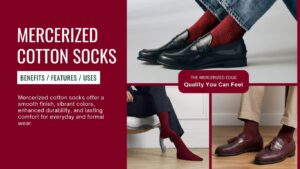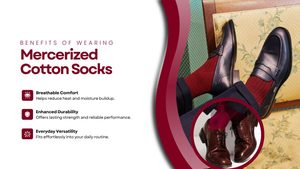
A cotton sock might look simple on a product page. The feel and performance can vary greatly. The yarn used, how it is knitted and the finishing process all shape the product. Mercerisation adds another layer. It changes the way cotton fibres behave possibly giving the material a polished look, better dye absorption and stronger resistance to stretching.
For clothing brands the appeal goes beyond shine. It’s about offering a sock that looks thoughtful and well-made while making choices about materials, colour, comfort and long-term quality. Still the finished sock must be tested. Mercerisation alone doesn’t guarantee performance.
Here are 10 reasons to consider mercerized organic cotton socks for your collection:
Table of Contents
Toggle1. Appearance with Shine and Smoothness
Mercerisation uses a controlled alkaline solution on cotton fibres often while they are under tension. This alters the fibre shape. Can give the yarn a smoother more reflective surface.
This change may matter for brands that focus on premium basics formal wear or coordinated clothing lines. A slight sheen can make a sock appear refined compared to a standard matte cotton version. The final look also depends on the yarn quality, how it’s knitted and how it’s finished. Always review the sock sample, not just the fibre description.
2. Improved Colour Vibrancy and Retention
Mercerized cotton tends to absorb dyes effectively. This allows clearer colours when the dyeing process is done correctly.
For a brand this can help create signature colours, match palettes or keep colour consistent across a full range. Still better dye absorption doesn’t mean colourfastness. Always ask the manufacturer to confirm the dyeing process and check that the colours meet your required standards for fading, washing and exposure to light.
3. Soft Comfortable Feel for Everyday Wear
Comfort comes from more than one factor. The type of cotton how the yarn is spun, sock thickness, seam design, elastic content and fit all shape how a sock feels when worn.
Mercerized cotton might look smoother. That doesn’t guarantee softness. Brands should test finished samples against their intended use—what works for a dress sock may not suit a heavy-duty walking sock. Real-world wear trials are essential to spot issues that a fibre spec can’t show.
4. Organic Cotton for Sustainability-Focused Collections
Organic cotton can support a brand’s commitment to ethical sourcing and environmental responsibility. The label must be backed by proof.
Buyers should check the fibre origin, review supplier documents and confirm any certifications required for their market. Organic and mercerised are different: organic relates to how the cotton’s grown and certified while mercerisation is a processing step. One does not confirm the other. If using a recognised standard verify the scope of certification and the rules for labelling before making any claims.
5. Enhanced Fibre Strength and Durability
Research shows that mercerisation can improve tensile strength in cotton depending on how the process is applied. That’s useful in product design. It doesn’t say how long a sock will last.
Durability depends on factors: yarn quality, how the yarn is made, reinforcement in the heel and toe how often it’s worn and how it’s cleaned. For private-label orders set clear quality standards and test actual finished samples. That gives a comparison between suppliers than relying only on the term “mercerized.”
6. Breathable Yarn for All-Day Comfort
Cotton is often chosen for its ability to absorb moisture and stay comfortable. Breathability and moisture management depend on the full construction—how the sock is knitted, how thick it is and what other fibres are used.
A light dress sock and a thick athletic sock will behave differently. Brands should match the yarn to the use case. Test the sock under conditions that reflect real wear. Mercerisation is one part of the material choice, not a replacement for evaluating the product.
7. Premium Positioning for Clothing Brands
A clean look, selected yarn and consistent colour can help a brand build a premium image. Mercerized cotton may support that story if the finish is visible and the quality difference matters to the customer.
The business case still matters. Compare the sample, production cost, retail price and what quality level you expect. A technical feature is valuable only if it serves the product’s purpose—not just because it serves an end purpose.
8. Suitable for Custom Colours, Patterns and Designs
The increased dye affinity of mercerised cotton can help achieve colours. The actual result depends on the dye system and how the process is run.
For custom sock designs provide a colour reference. Ask for a lab dip or sample approval. Also consider factors: pattern complexity, yarn availability, knitting limits and minimum order quantities. Confirm these details early especially if the design must match pieces or meet a delivery date.
9. Ideal for Private-Label and OEM Manufacturing
Private-Label and OEM projects need more than just choosing a fibre. Buyers need agreements on specs, samples, branding, packaging, quality checks and production expectations.
As a mercerized organic cotton sock manufacturer, Texcyle offers product development support, customisation and full services including packaging and labelling. Brands interested in this material should confirm directly whether they can meet the treatment, fibre blend and specifications. Don’t assume availability just because the material is listed.
10. Added Value for Premium Retail and Export Markets
When selling in the USA, UK or India a sock’s value must match customer expectations, pricing and local rules. Mercerised cotton may help create a polished product but export success also depends on accurate fibre declarations, proven claims, packaging rules and consistent quality.
Before ordering in bulk approve a sample that represents production, document the agreed specs and verify any certification claims. These steps help avoid surprises when the order arrives.
Choose Materials That Support Your Brand
Mercerised organic cotton socks can be a fit for brands seeking a more refined look and a thoughtful material story. The best decision comes from testing the product not just trusting a label or a name.
FAQs:
1. What are the benefits of mercerized cotton socks for clothing brands?
They may offer lustre, better dye absorption and a more polished look depending on the yarn, knitting and finishing.
2. How does mercerized cotton improve the durability, softness and appearance of socks?
It can increase strength. Durability depends on yarn, construction and care. Softness depends on fibre, spinning and fit. Appearance benefits come from the finish. Only if the process is done well.
3. What should brands consider when sourcing mercerized cotton socks, from manufacturers?
Check fibre claims, review samples confirm specifications, test colourfastness ensure quality control understand customisation limits and verify MOQ and labelling rules.
For custom or private-label sock enquiries, visit https://texcyle.co/ or call us at +91 7982201014 to discuss your requirements and confirm whether the desired materials and finishing options are available.