When buying from a socks exporter in India, it is necessary to get socks from a provider that can provide high-quality products consistently. This means keeping up with the changing market conditions and using the best quality yarn to make the socks. The quality of every stage in production from the selection of the correct raw materials to the final pre-shipment checks will influence the overall standards of the final product. Testing and quality checks will be carried out by reputable exporters in India to ensure socks meet buyer specifications and expectations and conform to an acceptable international standard. By knowing what testing and quality checks are done, B2B buyers can make better sourcing decisions and find reliable partners in India.
Table of Contents
ToggleUnderstanding Quality Standards in Socks Exporting
In order to run a successful sock export business, quality standards must be met. International buyers will expect top notch socks. These must include;
- Correct yarn composition
- Correct sizing
- Consistent colour grades
- Good quality stitching
- Comfortable and durable.
Depending on the products being sent to which country (UK, Europe & USA) specific test reports and certifications may be required.
Renowned sock exporters will ensure that these quality standards are met during bulk production in order to avoid quality issues, delays and rejections.
Raw Material and Yarn Quality Inspection
Using quality yarns in production will create good quality socks. The yarn used in production affects the softness, breathability, stretch, durability and comfort in the final product.
Common materials used in socks include:
- Cotton
- Polyester
- Nylon
- Bamboo Viscose
- Elastane.
During yarn quality checks the following will be tested:
- Thickness
- Quality and strength of fibres
- Softness
- Consistent colour
- Impurities.
If organic socks are being sourced from India, experienced exporters will ensure that the quality of organic fibres used are of a top notch quality to meet buyer specifications.
Yarn Composition & GSM Testing
Yarn composition refers to the composition of fibres within the socks. Different percentages of fibres may be used in the socks, for example, cotton, polyester and elastane. Manufacturers will ensure that the composition of socks matches the buyer specification. Even small differences in composition can have an impact on comfort, stretch and durability.
GSM indicates how heavy/light the yarn is in grams per Square Metre. Consistent yarn composition and GSM testing ensures that larger orders will be consistent in terms of quality.
Shrinkage, Dimensional Stability & Stretch Recovery Testing
Socks are subject to regular wear and tear. Therefore, it is important to ensure that socks maintain their shape after multiple uses.
Dimensional stability testing ensures that socks have not changed in length/width after washing. If socks have shrunk too much, they may not fit well. If socks do not have good stretch recovery, they may lose shape after repeated wearing.
Manufacturers will carry out tests to ensure:
- Length/Width of socks remains correct after washing
- yarn has good stretch
- Elasticity around cuff and foot area
- Good stretch recovery
- Good shape retention
Colourfastness and Washing Durability Testing
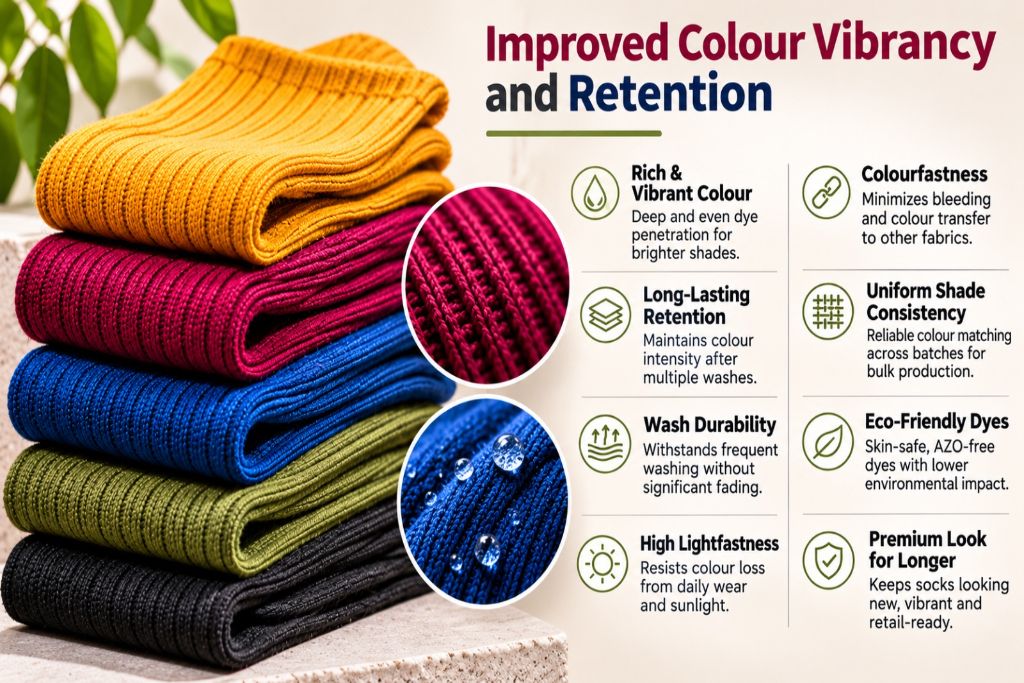
It is very important that quality checks are performed on the colour of socks, particularly if a brand offers a wide range of colours and designs.
Therefore, manufacturers will perform a variety of tests to see how the yarn reacts including:
- Fastness to washing
- Fastness to rubbing
- Fastness to light
Pilling Resistance and Abrasion Testing
Pilling is when small lumps of fibre form on the surface of the yarn. This can make socks look old even if they have only been worn a few times. Abrasion resistance refers to how well the yarn can withstand friction. As socks are in constant contact with footwear and skin, this test is crucial. High levels of pilling resistance and abrasion resistance means that socks will look neat and will be durable throughout a longer period.
Size, Fit and Measurement Inspection
Reputable manufacturers will ensure that socks are the correct size as per the size chart provided by the buyer, and can meet the international buying standards.
Measurements checked include:
- Length of sock
- Length of foot
- Width of foot
- Length of cuff
- Stretch of sock
In-Line Quality Checks During Socks Manufacturing
Throughout the production, several times quality checks will be performed, so errors can be picked up early in production. If products fail quality checks, they get rejected immediately by manufacturers.
Common checks include:
- Quality of knitted yarn
- Tears/weakness in thread
- Quality of heel and toe
- Quality of stitching and linking
- Holes, irregular patterns and other issues.
Quality checks at regular points in production mean less time is wasted, and means bulk orders have consistent quality.
Final Inspection and Pre-Shipment Quality Checks
Before socks are packaged and shipped, final quality checks are performed. This is an important stage to ensure that all buyer specifications have been met.
Common checks include:
Visual Check: No holes, colour variation, loose threads, incorrect stitching and finishing issues.
Size Check: All socks are the correct sizes as per the approved size guide.
Appearance Check: All socks meet the required colours, patterns and designs as per the approved sample.
Quantity Check: Correct quantity of socks with the order.
Quality Check: Quality of yarn, make and appearance are to a good standard.
Packaging Check: Products have been packed as required by the buyer.
Depending on buyer requirements, further testing may be performed on samples.
If socks do not meet quality standards, they can be removed from the order before shipment. This avoids any complaints, returns or rejections.
Packaging, Labelling and Export Compliance Requirements
Exporting socks requires compliance with the packaging, labelling and customs regulations of the destination country. Product labels must accurately mention fibre composition and percentages, size, country of origin, manufacturer details, and care instructions, wherever applicable. Exporters must also ensure that packaging meets destination-country requirements and includes correct carton markings, quantities and weight details.
From India, essential export documentation generally includes an Importer Exporter Code (IEC), commercial invoice, packing list, shipping bill and Bill of Lading or Airway Bill. A Certificate of Origin may also be required, particularly when claiming preferential trade benefits. Depending on the destination, exporters must also check textile labelling laws, chemical safety regulations such as EU REACH, and any buyer-specific testing or certification requirements before dispatch.
FAQs:
- What quality tests are performed on socks before export?
Yarn quality, correct material, correct GSM, shrinkage, colour fastness, stretch recovery, pilling resistance, abrasion resistance, correct sizing, quality of stitching, quality of finishing and correct packaging.
- What are the most important quality standards for exporting socks from India?
Correct material, consistent sizing, good colour fastness, controlled shrinkage, durability and finishing. Safety, labelling and documentation requirements must also be followed according to the destination country.
- What is included in a pre-shipment inspection for socks?
Appearance, material quality, sizing, colours, stitching quality, correct quantity and packaging/labelling checks are performed. This ensures that the final order meets buyer requirements.
- How do Indian socks manufacturers maintain consistent quality in bulk orders?
Indian socks manufacturers maintain consistent quality in bulk orders through raw material inspections, in-process testing, standardised production methods and final quality checks. Yarn quality, yarn performance, sock dimensions and finishing are carefully monitored. Before dispatch, finished products are compared against approved samples and buyer specifications to ensure consistency across large and repeat orders.
For international B2B buyers, selecting a manufacturing and export partner should involve more than evaluating pricing and production capacity. Understanding the quality control procedures, testing capabilities and consistency of production is equally important. Working with an experienced socks exporter from India can help businesses maintain product standards, minimise sourcing risks and establish a dependable supply chain for long-term growth.
Contact Texcyle to discuss your requirements and discover tailored sock manufacturing solutions for your brand.
Connect with the team directly at +91 79822 01014 and request a Quote Today!