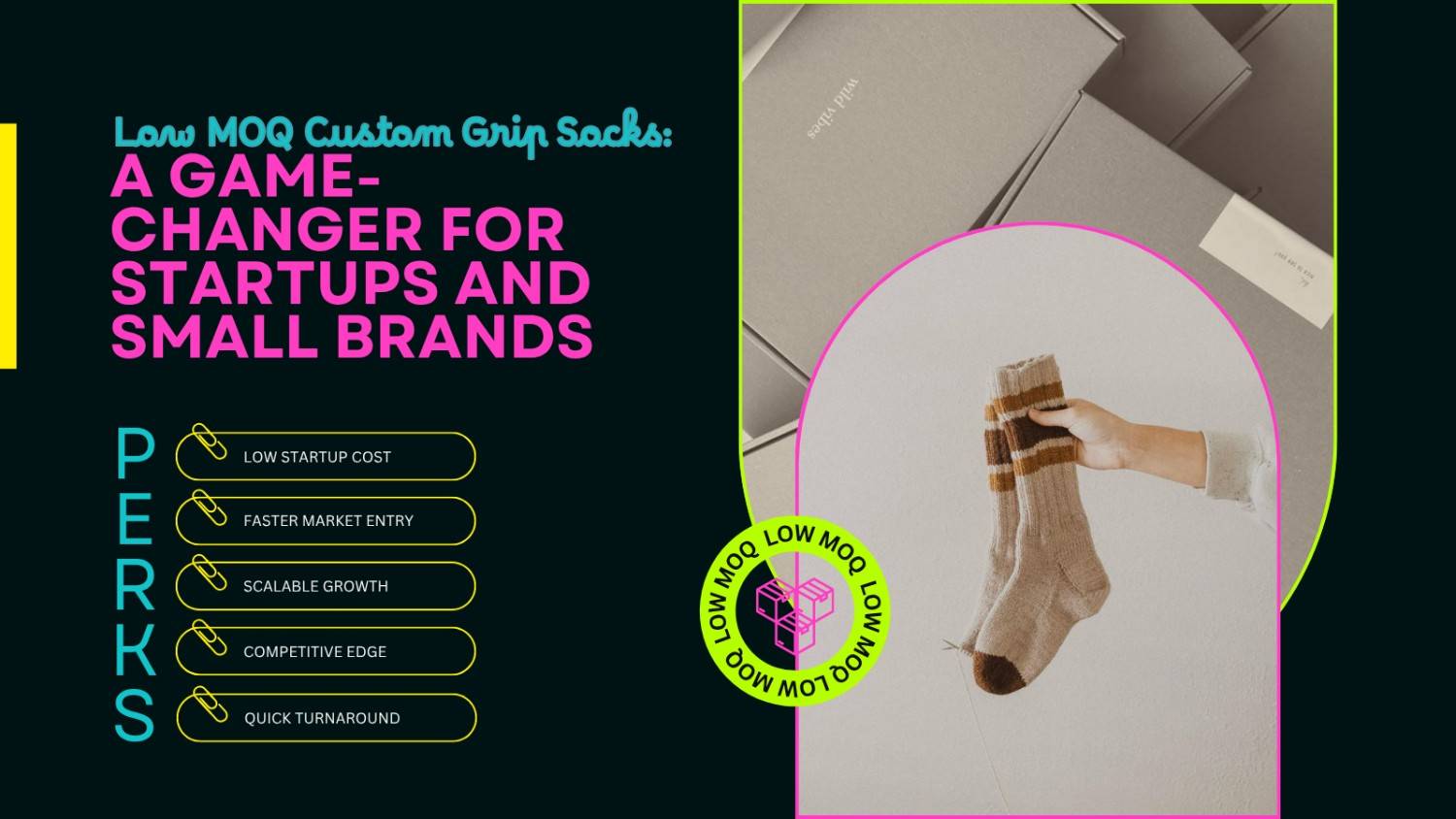
Low MOQ Custom Grip Socks: A Game-Changer for Startups and Small Brands

Custom grip socks used to be the kind of product only well-funded brands could afford to launch properly. High minimum order quantities meant serious upfront capital, and for a startup still figuring out whether its customers actually wanted grip socks in the first place, that was a significant bet to take. Low MOQ manufacturing has changed that equation entirely, and the effects are being felt across fitness, sports, retail, and branded merchandise.

Whether you’re setting up an online store, supplying a group of Pilates studios, or trying to put your brand’s logo on a product that people will actually use every day, low MOQ custom grip socks give you room to move without betting the whole operation on a single product decision.

The Cash Flow Problem and How Low MOQ Solves It

Most startups don’t fail because their product is bad. They fail because they run out of money before the product gets a proper chance. Ordering large quantities of a new product ties up capital that could otherwise go into marketing, customer service, logistics, or simply keeping the lights on while you figure out what works.

Low MOQ manufacturing lets you place smaller initial orders and prove the concept before scaling. You’re not betting four months of runway on a single sock design you’re testing, learning, and then growing from a position of actual market evidence. Many brands developing custom grip socks specifically choose low MOQ production for exactly this reason: the unit economics aren’t quite as attractive as bulk orders, but the risk profile is dramatically better.

Testing Before Committing

Consumer preferences shift. A colourway that looked perfect in a product mockup sometimes falls flat with real customers. A grip pattern that seemed innovative can turn out to be less important to buyers than the fabric feel. None of this is predictable in advance, which is why the ability to test small before committing large is so valuable.

With low MOQ production, you can run limited drops, collect genuine customer feedback, iterate on the design, and place your next order with real data rather than guesswork. That flexibility isn’t just nice to have for many small brands; it’s the difference between a product that finds its market and one that ends up as expensive dead stock.

Speed as a Competitive Advantage

The fitness and athleisure markets move fast. A trend that’s gaining momentum in March can be mainstream by June and overdone by September. Brands that can move quickly from concept to product have a genuine edge over slower competitors.

Low MOQ manufacturing compresses the product development timeline considerably. You’re not waiting to accumulate enough volume to justify a production run; you can go from sampling to launch in a fraction of the time a traditional manufacturing model would require. For seasonal products, limited editions, or trend-responsive collections, that speed is worth a great deal.

Creative Freedom Without Financial Pressure

One of the more underrated benefits of low MOQ production is what it does for design ambition. When you’re committed to 10,000 units of a single design, you tend to play it safe. When you can run 200 units of five different designs, you can afford to take creative risks.

Most manufacturers working with small brands on custom grip socks offer extensive customisation options, including colours, grip patterns, sock lengths, fabric blends, logo placement, seasonal variations, and packaging. A custom grip socks manufacturer with proper small-batch capability can help brands develop distinctive collections that actually stand out rather than defaulting to whatever feels lowest-risk.

Where Low MOQ Grip Socks Make Most Sense

Not every business is trying to supply a mass market, and low MOQ production reflects that reality. The brands and organisations that benefit most tend to be those serving defined, specific audiences:

  • Pilates studios and yoga instructors building branded merchandise for their communities
  • Boutique fitness centres looking for a practical, usable product to sell or gift
  • Dance academies supplying grip socks as part of their standard kit
  • Physiotherapy clinics offering branded post-treatment support accessories
  • Sports teams wanting a custom kit without buying thousands of pairs
  • Corporate wellness programmes requiring branded giveaway items
  • E-commerce brands testing a new product category

For all of these, the economics of large-scale manufacturing simply don’t fit. Low MOQ is the right tool for the job.

Inventory Management Gets Simpler

There’s a hidden cost in large inventory that doesn’t show up until it becomes a problem: storage space, insurance, the administrative overhead of tracking slow-moving lines, and the eventual pain of discounting unsold stock. These aren’t dramatic individually, but they add up, particularly for growing businesses where management attention is already stretched. Smaller, more frequent orders change the inventory picture significantly. Stock turns over faster, storage requirements stay manageable, and there’s less dead weight on the balance sheet. When a design stops selling well, you’re not sitting on a thousand units of it; you’ve already moved on to the next thing.

Branding That Actually Looks Professional
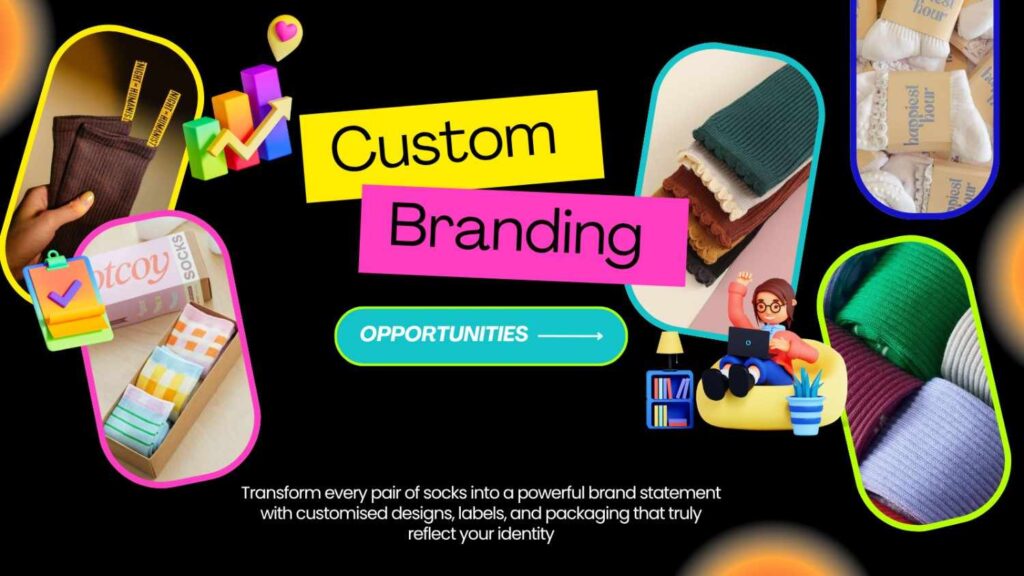
Low MOQ no longer means limited branding options. The best custom grip socks manufacturers work with small brands on the same level of customisation available to large volume clients. That includes woven logos, colour-matched grips, custom hang tags, retail-quality packaging, and branded labels.

For a small brand, this matters enormously. If you’re selling a product to a customer alongside premium competitors, it needs to look like it belongs in that company. A custom grip socks manufacturer with proper capabilities can deliver that finish even on smaller runs, which means small brands can compete on product quality and presentation from day one.

Quality Doesn’t Have to Suffer

The assumption that small orders mean lower quality is outdated. Reputable manufacturers use the same knitting machines, the same materials, and the same quality control standards regardless of order size. What varies is volume, not standards.

This matters for brand reputation. Customers who receive a well-made pair of grip socks become repeat buyers. Customers who receive a poorly finished product leave reviews that outlast the product itself. Starting with quality, even on small runs, is the better long-term bet.

The Bigger Picture

Low MOQ manufacturing has genuinely democratised product development in categories like grip socks. Smaller brands no longer have to choose between entering the market with inadequate capital or waiting until they can afford large production runs. They can launch, learn, and grow at a pace that reflects the reality of their business rather than the minimum requirements of traditional manufacturing.

Whether you’re supplying fitness studios, building an e-commerce brand, or developing a corporate merchandise line, custom grip socks on low MOQ terms offer a practical, scalable path where the risk is proportionate to where you actually are in your business journey.

FAQs:

1. What does Low MOQ mean in custom grip sock manufacturing?

Low MOQ stands for Minimum Order Quantity. It means you can place smaller production runs, which lowers the upfront investment and reduces the risk of being stuck with unsold stock.

2. Why are low MOQ custom grip socks beneficial for startups?

They let you test the market before committing to large volumes, preserve cash flow, and give you the flexibility to iterate based on actual customer feedback.

3. What types of businesses benefit most from low MOQ grip socks?

Fitness studios, Pilates instructors, yoga brands, sports teams, physiotherapy clinics, online retailers, and corporate wellness programmes, essentially any organisation that wants custom-branded socks without mass-market volumes.

4. Can I add my logo to custom grip socks on small orders?

Yes. Most manufacturers offer logo customisation through woven designs, embroidery, grip patterns, labels, and packaging, even on smaller runs.

5. What customisation options are typically available?

Colours, fabrics, grip patterns, sock styles, packaging formats, branding placements, labels, and retail presentation can usually all be customised.

6. Are low MOQ custom grip socks suitable for e-commerce?

Particularly well suited, actually. Smaller runs let online businesses test products carefully before scaling, which is exactly the right approach for a channel where customer reviews carry significant weight.

7. Can manufacturers provide custom packaging on small orders?

Most can. Branded packaging, hang tags, custom labels, and retail-ready presentation are standard offerings from manufacturers who work regularly with small brands.

8. What materials are commonly used in grip socks?

Cotton blends, bamboo fibres, polyester, nylon, and elastane for the sock body, with silicone or rubber grip elements on the sole.

9. Does quality hold up on smaller orders?

Yes. Reputable manufacturers apply the same production standards across all order sizes. The machines, materials, and quality checks don’t change based on volume.

Reach out at info@texcyle.co or Call Us Today +917982201014 and explore what Texcyle can do for your brand.
Leave a Reply

Your email address will not be published. Required fields are marked *

Custom grip socks used to be the kind of product only well-funded brands could afford to launch properly. High minimum order quantities meant serious upfront capital, and for a startup still figuring out whether its customers actually wanted grip socks in the first place, that was a significant bet to take. Low MOQ manufacturing has changed that equation entirely, and the effects are being felt across fitness, sports, retail, and branded merchandise.

Whether you’re setting up an online store, supplying a group of Pilates studios, or trying to put your brand’s logo on a product that people will actually use every day, low MOQ custom grip socks give you room to move without betting the whole operation on a single product decision.

The Cash Flow Problem and How Low MOQ Solves It

Most startups don’t fail because their product is bad. They fail because they run out of money before the product gets a proper chance. Ordering large quantities of a new product ties up capital that could otherwise go into marketing, customer service, logistics, or simply keeping the lights on while you figure out what works.

Low MOQ manufacturing lets you place smaller initial orders and prove the concept before scaling. You’re not betting four months of runway on a single sock design you’re testing, learning, and then growing from a position of actual market evidence. Many brands developing custom grip socks specifically choose low MOQ production for exactly this reason: the unit economics aren’t quite as attractive as bulk orders, but the risk profile is dramatically better.

Testing Before Committing

Consumer preferences shift. A colourway that looked perfect in a product mockup sometimes falls flat with real customers. A grip pattern that seemed innovative can turn out to be less important to buyers than the fabric feel. None of this is predictable in advance, which is why the ability to test small before committing large is so valuable.

With low MOQ production, you can run limited drops, collect genuine customer feedback, iterate on the design, and place your next order with real data rather than guesswork. That flexibility isn’t just nice to have for many small brands; it’s the difference between a product that finds its market and one that ends up as expensive dead stock.

Speed as a Competitive Advantage

The fitness and athleisure markets move fast. A trend that’s gaining momentum in March can be mainstream by June and overdone by September. Brands that can move quickly from concept to product have a genuine edge over slower competitors.

Low MOQ manufacturing compresses the product development timeline considerably. You’re not waiting to accumulate enough volume to justify a production run; you can go from sampling to launch in a fraction of the time a traditional manufacturing model would require. For seasonal products, limited editions, or trend-responsive collections, that speed is worth a great deal.

Creative Freedom Without Financial Pressure

One of the more underrated benefits of low MOQ production is what it does for design ambition. When you’re committed to 10,000 units of a single design, you tend to play it safe. When you can run 200 units of five different designs, you can afford to take creative risks.

Most manufacturers working with small brands on custom grip socks offer extensive customisation options, including colours, grip patterns, sock lengths, fabric blends, logo placement, seasonal variations, and packaging. A custom grip socks manufacturer with proper small-batch capability can help brands develop distinctive collections that actually stand out rather than defaulting to whatever feels lowest-risk.

Where Low MOQ Grip Socks Make Most Sense

Not every business is trying to supply a mass market, and low MOQ production reflects that reality. The brands and organisations that benefit most tend to be those serving defined, specific audiences:

  • Pilates studios and yoga instructors building branded merchandise for their communities
  • Boutique fitness centres looking for a practical, usable product to sell or gift
  • Dance academies supplying grip socks as part of their standard kit
  • Physiotherapy clinics offering branded post-treatment support accessories
  • Sports teams wanting a custom kit without buying thousands of pairs
  • Corporate wellness programmes requiring branded giveaway items
  • E-commerce brands testing a new product category

For all of these, the economics of large-scale manufacturing simply don’t fit. Low MOQ is the right tool for the job.

Inventory Management Gets Simpler

There’s a hidden cost in large inventory that doesn’t show up until it becomes a problem: storage space, insurance, the administrative overhead of tracking slow-moving lines, and the eventual pain of discounting unsold stock. These aren’t dramatic individually, but they add up, particularly for growing businesses where management attention is already stretched. Smaller, more frequent orders change the inventory picture significantly. Stock turns over faster, storage requirements stay manageable, and there’s less dead weight on the balance sheet. When a design stops selling well, you’re not sitting on a thousand units of it; you’ve already moved on to the next thing.

Branding That Actually Looks Professional

Low MOQ no longer means limited branding options. The best custom grip socks manufacturers work with small brands on the same level of customisation available to large volume clients. That includes woven logos, colour-matched grips, custom hang tags, retail-quality packaging, and branded labels.

For a small brand, this matters enormously. If you’re selling a product to a customer alongside premium competitors, it needs to look like it belongs in that company. A custom grip socks manufacturer with proper capabilities can deliver that finish even on smaller runs, which means small brands can compete on product quality and presentation from day one.

Quality Doesn’t Have to Suffer

The assumption that small orders mean lower quality is outdated. Reputable manufacturers use the same knitting machines, the same materials, and the same quality control standards regardless of order size. What varies is volume, not standards.

This matters for brand reputation. Customers who receive a well-made pair of grip socks become repeat buyers. Customers who receive a poorly finished product leave reviews that outlast the product itself. Starting with quality, even on small runs, is the better long-term bet.

The Bigger Picture

Low MOQ manufacturing has genuinely democratised product development in categories like grip socks. Smaller brands no longer have to choose between entering the market with inadequate capital or waiting until they can afford large production runs. They can launch, learn, and grow at a pace that reflects the reality of their business rather than the minimum requirements of traditional manufacturing.

Whether you’re supplying fitness studios, building an e-commerce brand, or developing a corporate merchandise line, custom grip socks on low MOQ terms offer a practical, scalable path where the risk is proportionate to where you actually are in your business journey.

FAQs:

1. What does Low MOQ mean in custom grip sock manufacturing?

Low MOQ stands for Minimum Order Quantity. It means you can place smaller production runs, which lowers the upfront investment and reduces the risk of being stuck with unsold stock.

2. Why are low MOQ custom grip socks beneficial for startups?

They let you test the market before committing to large volumes, preserve cash flow, and give you the flexibility to iterate based on actual customer feedback.

3. What types of businesses benefit most from low MOQ grip socks?

Fitness studios, Pilates instructors, yoga brands, sports teams, physiotherapy clinics, online retailers, and corporate wellness programmes, essentially any organisation that wants custom-branded socks without mass-market volumes.

4. Can I add my logo to custom grip socks on small orders?

Yes. Most manufacturers offer logo customisation through woven designs, embroidery, grip patterns, labels, and packaging, even on smaller runs.

5. What customisation options are typically available?

Colours, fabrics, grip patterns, sock styles, packaging formats, branding placements, labels, and retail presentation can usually all be customised.

6. Are low MOQ custom grip socks suitable for e-commerce?

Particularly well suited, actually. Smaller runs let online businesses test products carefully before scaling, which is exactly the right approach for a channel where customer reviews carry significant weight.

7. Can manufacturers provide custom packaging on small orders?

Most can. Branded packaging, hang tags, custom labels, and retail-ready presentation are standard offerings from manufacturers who work regularly with small brands.

8. What materials are commonly used in grip socks?

Cotton blends, bamboo fibres, polyester, nylon, and elastane for the sock body, with silicone or rubber grip elements on the sole.

9. Does quality hold up on smaller orders?

Yes. Reputable manufacturers apply the same production standards across all order sizes. The machines, materials, and quality checks don’t change based on volume.

Reach out at info@texcyle.co or Call Us Today +917982201014 and explore what Texcyle can do for your brand.
Leave a Reply

Your email address will not be published. Required fields are marked *