Grip sock manufacturers have changed how athletes, professional and recreational alike, think about footwear. What started as a niche product for Pilates and yoga studios has gradually worked its way into football training grounds, gym floors, and rehabilitation centres. The reason isn’t marketing. It’s the fairly simple physics of what happens when your foot stays exactly where it should be inside a shoe, compared to what happens when it doesn’t.
Performance gear has become intensely data-driven, and athletes are scrutinising every component of their kit. Grip socks are increasingly passing that scrutiny.
What Grip Socks Actually Do During Performance
The premise is straightforward. Inside a shoe, feet move. Most people don’t notice this movement during a casual walk, but sprinting, cutting, or landing after a jump makes the foot slide slightly inside the shoe. Even that small movement affects stability. This internal movement is usually small, a few millimetres at most, but during repeated acceleration, deceleration, and directional changes, those millimetres matter. Every instance of internal foot slip is energy that doesn’t go into the movement itself. It’s also a potential instability that the rest of the kinetic chain has to compensate for.
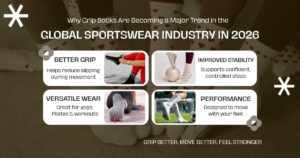
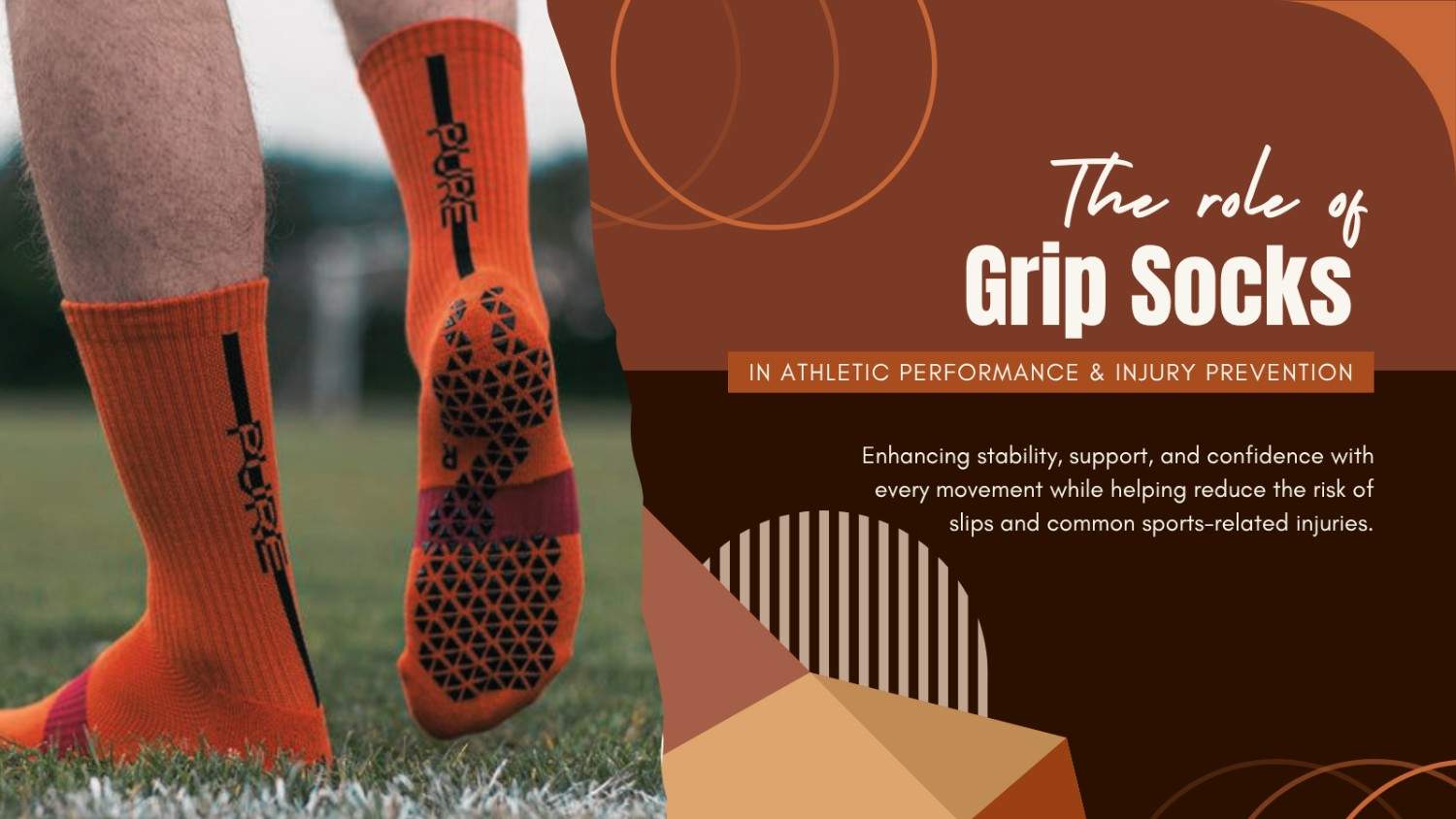
Grip socks use silicone or rubber grip elements on the sole to increase friction between the foot and the shoe interior. The foot stays anchored in position. Force transfers more directly. For example, a football player changing direction to avoid a defender wants the shoe and foot to move as one unit rather than independently. Movements become more responsive. For sports where split-second directional changes are part of the game, such as football, basketball, and tennis, that improved connection is genuinely useful.
Many leading grip sock manufacturers now design sport-specific products, recognising that a football player and a Pilates instructor have quite different requirements from their grip socks. That level of product refinement reflects how seriously the category is being taken. A football grip sock usually focuses on heel lockdown and durability, while Pilates socks prioritise barefoot traction and flexibility.
Balance, Control, and What They Depend On
Balance is easy to take for granted until you lose it. In sport, balance determines whether a landing stays controlled, whether a pivot leads into the next movement efficiently, or whether a reach to intercept a ball turns into a stumble. It depends on proprioception, your body’s ability to sense its own position, and proprioception depends, in part, on stable, reliable foot contact. Anyone who’s slipped slightly while landing from a jump knows how quickly balance can disappear.
Grip socks improve the quality of that contact. Athletes often describe the feeling as being more ‘connected’ to the surface they’re moving on, whether that’s an indoor court, a gym floor, or the interior of a boot. That sense of connection isn’t just psychological; it reflects a measurable improvement in friction that affects how the body can move.
Grip sock manufacturers in India have been particularly active in developing products that meet international performance standards while remaining comfortable enough for extended training sessions. The combination of quality engineering and competitive pricing has made the category more accessible across a range of sports.
Injury Prevention: What Grip Socks Can and Can’t Do
The injury prevention claims around grip socks deserve careful handling. They’re genuine, but they’re also contextual. Grip socks reduce certain risk factors, such as internal foot movement, unstable footing on smooth surfaces, and blistering caused by repeated small friction events, without eliminating injury risk. They’re one component of a sensible prevention strategy, not a replacement for proper footwear, conditioning, or training load management.
That said, the specific risks they do address are common and consequential. Ankle sprains often begin with an unstable foot contact. Ankle sprains remain one of the most common injuries in sports involving rapid changes of direction. Blisters form at the points where skin and sock slide against each other repeatedly. Muscle fatigue accumulates faster when the body is constantly compensating for minor instabilities. Grip socks address all three mechanisms directly.
For athletes managing existing vulnerabilities, recovering from an ankle injury, dealing with hypermobile joints, or playing on surfaces that create specific traction challenges, the risk reduction from a well-made pair of grip socks can be more substantial.
High-Intensity Sports: Where the Benefit Is Most Visible
Not every sport demands the same from a grip sock. In lower-intensity activities, the benefits are real but modest. In sports involving frequent explosive movements, the value of improved foot stability compounds.
Football, basketball, volleyball, and badminton all require athletes to change direction at speed, often on unpredictable surfaces. Each of those changes demands rapid force transfer through the foot. Even small improvements in foot stability during those moments translate into more efficient movement and, over the course of a game, lower cumulative fatigue.
Tennis players making lateral defensive moves and basketball players landing from jumps are both relying on their feet staying exactly where their shoes put them. Grip socks reduce the chance of that relationship breaking down at a critical moment.
How the Technology Works
Modern grip sock design is more considered than the product’s simple premise might suggest. The grip elements themselves, typically silicone or rubber, are placed strategically at the ball of the foot and heel, where forces during athletic movement are greatest. They don’t cover the entire sole, which would restrict the natural flex of the foot. Not all grip patterns perform equally. Manufacturers often test different dot sizes and layouts depending on the intended sport.
The fabric construction around the grip elements matters as much as the grips themselves. Moisture-wicking fibres pull sweat away from the skin, because a damp foot against a damp sock interior creates its own traction problems. Ergonomic shaping and arch compression improve overall fit. Seamless toe construction eliminates a common pressure point that causes hotspots during extended sessions.
The result of good design in this space is a sock that improves traction without feeling restrictive, which is important because a sock that makes an athlete feel constrained will quickly end up in the kit bag rather than on the foot.
Comfort During Long Training Sessions
Performance products have to earn their place in a training kit, and athletes don’t keep using things that make them uncomfortable. The best grip socks from quality grip sock manufacturers in India use premium cotton blends or technical fabrics that manage moisture effectively and stay comfortable across multi-hour training sessions.
Cushioning at the heel and ball of the foot reduces impact fatigue. Ventilation zones prevent the overheating that comes from prolonged activity in an enclosed space. These aren’t luxuries; they’re the baseline requirements for a product that’s going to be worn during hard training.
Rehabilitation and Beyond Athletic Use
Grip socks have an application beyond competitive sport that’s worth acknowledging. Physiotherapists working with patients recovering from surgery or injury regularly encounter the challenge of getting people moving confidently on smooth clinic floors. The risk of slipping during balance and gait exercises is real, and that risk creates hesitation that can slow rehabilitation progress. Many physiotherapy clinics already recommend grip socks during balance exercises, especially after ankle or knee injuries. Grip socks address this directly. They give patients something reliable underfoot, which improves confidence during exercises that might otherwise feel precarious. Older adults doing mobility work face a similar dynamic, and grip socks are increasingly recommended in that context, too.
The product has found a role that extends well beyond the athletes who first drove its development.
Choosing a Pair
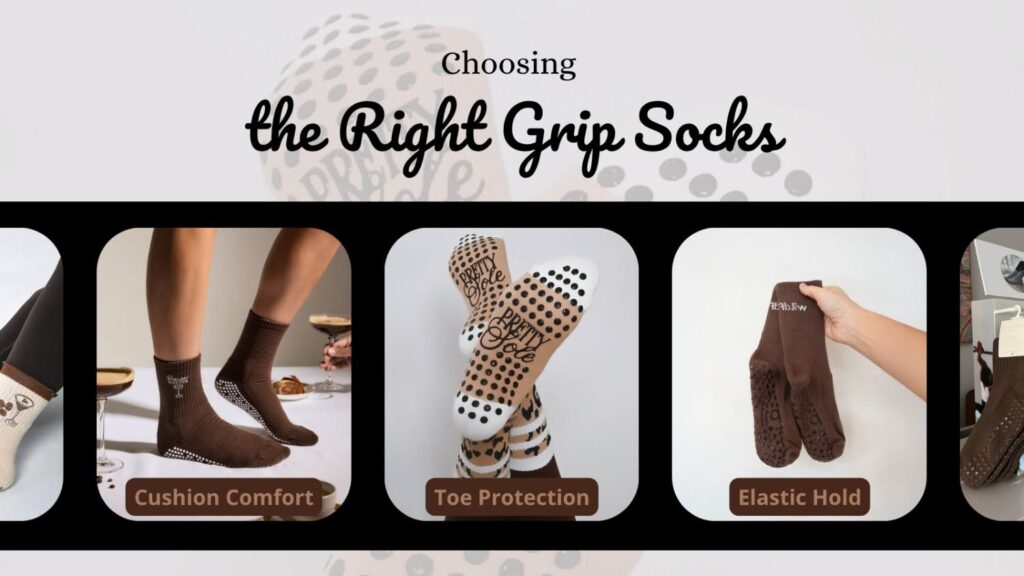
The category now covers a wide range of quality and price points, so it’s worth knowing what to look for. Key considerations:
- Breathable, moisture-wicking fabric construction, not just grip elements added to a generic sock
● Durable silicone grip patterns that won’t delaminate after a few washes
● Reinforced heel and toe sections that handle the specific stress of athletic movement
● Arch compression that supports the foot’s natural structure during activity
- Correctly sized grip socks are less effective if the fit is loose
Choosing a product from a manufacturer that takes design seriously makes a noticeable difference in both performance and longevity. If you’re buying online, checking grip durability and material composition is often more useful than focusing only on price.
Where the Category Is Going
Sports apparel is heading toward lighter materials, more sustainability, smarter textiles, and tighter performance specifications. Grip socks are following that same trajectory. Manufacturers are experimenting with eco-friendly fibres, improved compression technologies, and grip patterns calibrated for specific sports and surface types. Some brands are already experimenting with recycled yarns and biodegradable packaging to reduce environmental impact. Whether that future includes embedded sensors or biometric data capture is speculative at this point, but the direction of travel is clear: grip socks are becoming a more sophisticated product, and the athletes using them are benefiting from that evolution.
For anyone looking to improve stability, reduce preventable injury risk, or simply get a more confident footing during training, investing in products from trusted grip socks manufacturers is a practical choice with a well-documented upside. Grip socks won’t replace good footwear or proper training, but they can provide a noticeable improvement in stability and confidence for athletes who regularly perform quick directional movements.
FAQs:
1. How do grip socks improve athletic performance?
By reducing internal foot movement inside the shoe, they improve force transfer, traction, balance, and overall movement efficiency during athletic activity.
2. Can grip socks help prevent injuries?
They reduce specific risk factors, such as slipping, blistering, and ankle instability, but they should be part of a broader approach that includes appropriate footwear and conditioning.
3. Which sports benefit the most?
Football, basketball, rugby, tennis, volleyball, yoga, Pilates, and gym training all see measurable benefits from improved grip and foot stability.
4. Do professional athletes use grip socks?
Yes, increasingly so. Grip socks are now a standard kit for many professional football players and are used across a range of other professional sports.
5. Are grip socks useful for running?
For short-distance, agility-based, or indoor running sessions where lateral stability matters, yes. For long-distance road running, the benefit is less pronounced.
6. What materials are commonly used?
Cotton blends, polyester, nylon, elastane, and bamboo fibres for the sock body, with silicone or rubber grip elements on the sole.
7. Can grip socks be worn without shoes?
Yes, this is one of their most popular applications. Yoga, Pilates, rehabilitation exercises, and indoor fitness sessions where barefoot grip is needed are all ideal use cases.
Reach out at info@texcyle.co or Call Us Today +917982201014 and explore what Texcyle can do for your brand.