A patient getting out of bed may face polished flooring or unsuitable footwear. Anti-slip socks for healthcare are sometimes regarded as temporary indoor footwear but suitability is dependent on fibre selection, fit, grip placement, laundering and testing.
For hospitals, nursing homes and distributors, these details impact comfort, consistency and purchasing. Bulk buyers also require clear specifications and approved samples.
Table of Contents
ToggleUnderstanding Anti-Slip Socks for Healthcare and Elderly Care
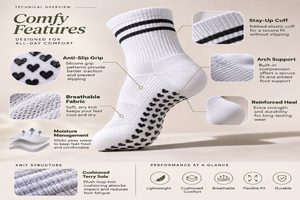
Healthcare grip socks are knitted socks with a traction pattern applied to the sole, usually using a printed or bonded material. They are used in hospitals, rehabilitation centres and residential care settings, often when patients lack suitable indoor footwear.
Socks provide little structural support. Grip socks are not a replacement for appropriately fitting footwear and not a standalone intervention for fall prevention. Suitability is based on mobility, clinical assessment and care setting.
Key Materials Used in Anti-Slip Socks
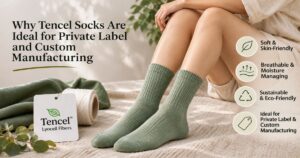
Cotton-rich blends are valued for softness and moisture absorption. However, cotton can retain moisture, so blends may be more practical when drying time and shape retention are important.
Polyester can improve durability and drying. Recycled polyester may meet recycled-content specifications, while elastane supports stretch and recovery.
Choose blends according to wear, laundering and cost; assess the finished yarn, not fibres in isolation.
Popular Grip Patterns and Silicone Printing Techniques
Grip systems may use silicone, PVC or thermoplastic rubber (TPR). Performance depends on formulation, application, curing and yarn compatibility; no material is universally superior.
Dots allow spacing to be adjusted; stripes create directional coverage, while honeycomb and geometric layouts distribute grip differently. Custom patterns can support institutional branding if they preserve the required contact area.
Compare adhesion, flexibility, coverage and wash resistance. Request samples and test results for the actual construction; a new pattern may behave differently after laundering.
Full-Sole vs Partial-Sole Grip Designs
Full-sole designs place grip across most of the underside, offering broader coverage but potentially using more material and requiring careful control of flexibility and print consistency.
Partial designs concentrate grip in areas such as the heel and forefoot. They can reduce material use and leave parts of the sole more flexible, but placement must suit intended movement and floor conditions.
Test samples on representative flooring; coverage alone does not establish traction.
Choosing the Right Sock Construction and Yarn Blends
Grip technology cannot compensate for poor construction. Knitting consistency, heel shaping, cuff elasticity and toe finishing all influence fit and stability.
A shaped heel helps limit rotation. Cuffs should retain the sock without uncomfortable pressure. Correct size grading matters: oversized socks can bunch, while tight socks may be difficult to put on.
Specify measurements, composition and stretch expectations before approving a sample.
Comfort, Breathability and Moisture Management
For extended wear, cotton-rich yarns absorb moisture, while synthetics can dry faster. Mesh or ventilation zones may improve airflow.
Check toe seams, internal finishing and cuff pressure. Bulky seams, rough yarns or tight elastic may trouble users with sensitive skin. Assess samples new and after washing.
Safety Standards and Slip-Resistance Testing
Do not assume every healthcare grip sock is a certified medical safety product. Testing should relate to the finished sock, grip material and intended conditions.
ISO 13287:2019 specifies a slip-resistance test method for personal protective equipment (PPE) footwear; it does not automatically certify knitted grip socks. The NHS Clinical Evaluation Team’s 2018 review likewise stated that PPE footwear standards did not apply to the slipper socks covered by its review.
ISO 6330:2021 specifies domestic washing and drying procedures for textile testing. It can provide a controlled laundering procedure for assessing changes to a sock or grip after washing; it is not a grip-performance certification.
Test on intended flooring, under relevant dry or wet conditions, and assess adhesion, laundering and dimensional stability. Fit, contamination, moisture and wear affect results. A 2021 rapid review found no strong or conclusive evidence that non-slip socks prevent hospital falls.
Customisation Options for Hospitals and Healthcare Brands
Institutional buyers may specify sock length, colour, size range, yarn composition, grip layout, branding and packaging. Document requirements before sampling. Samples let buyers assess fit, grip placement and comfort before bulk approval.
Texcyle’s website describes product development, design customisation, material sourcing and packaging support. Its published material range includes organic cotton, recycled polyester and bio-elastane. Healthcare-specific grip printing is not confirmed on the website and must be discussed separately.
Bulk Sourcing and Private Label Manufacturing
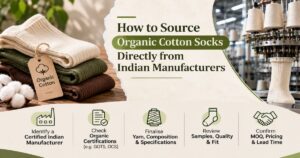
When evaluating an anti-slip socks manufacturer in India, prepare a specification covering fibre composition, construction, grip material and coverage, sizes, colours, packaging and destination-market requirements. Sampling and written approval should precede bulk production.
Clarify MOQs, production planning, quality records, labelling and export documents. Texcyle presents itself as a sock manufacturing and sourcing partner offering product development, customisation and packaging services. Confirm current commercial terms and whether the proposed grip application can be supported before ordering.
Quality Control and Choosing the Right Anti-Slip Sock Manufacturer
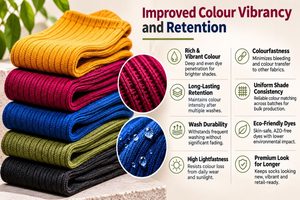
Evaluate knitting consistency, composition, measurements, grip placement and adhesion, wash durability, colour matching and packaging. Agree inspection criteria before production, then check pre-production samples and finished goods.
Documented specifications support supplier comparisons and repeat-order consistency. Ask how defects, changes and material claims are recorded.
Texcyle’s published process includes sampling and approval, product customisation and value-added packaging. Buyers should confirm grip technology, testing arrangements and relevant quality documentation directly.
FAQs:
1. What materials are best for manufacturing anti-slip socks?
Cotton-rich blends offer softness; polyester supports durability and drying, while elastane improves stretch and fit.
2. Which grip patterns provide better traction on hospital floors?
No pattern is universally best; performance depends on compound, coverage, flooring, fit and validated testing.
3. What safety standards should healthcare anti-slip socks meet?
Specify relevant textile chemical and laundering requirements; PPE footwear standards do not automatically certify socks.
4. What should buyers consider when sourcing anti-slip socks in bulk?
Assess specifications, fit, grip adhesion, wash durability, sampling, quality records, packaging and destination-market compliance.
Healthcare grip socks need balanced yarn comfort, construction, grip design and testing. Clear specifications and approved samples matter before bulk orders.
Contact Texcyle to discuss bulk requirements, material and construction options, custom product development, private-label specifications and packaging. Healthcare-specific grip applications should be confirmed during the initial technical discussion.
Connect with the team directly at +91 79822 01014 and request a Quote Today!