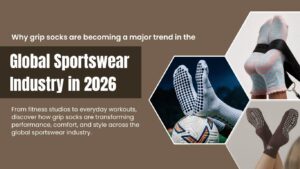
It seems that online shopping is becoming more and more popular nowadays. However, going into sports shops and searching online to find the best grip socks may prove to be hard and complicated. Having so many brands that claim themselves to be the best, what is the right approach to selecting the proper grip socks? That is exactly the point of this blog post.
People who love to wear socks or those who practice various kinds of outdoor activities should always select the best grip socks. The selection of a suitable grip proves to be very significant here.
Understanding the purpose of grip socks
The very first step in choosing the best grip socks is having a clear understanding about how and where you are going to use them based on different activities. These socks are especially used for:
- Dance and barre classes
- Hospital and rehabilitation use
- Everyday indoor comfort
- Yoga and pilates
- Gym workouts
- Football and sports training
For athletes and fitness enthusiasts, using grip socks helps enhance stability and reduce any unnecessary motion within the footwear. Compression grip socks are worn by many due to their added benefits such as increased blood circulation and reduced muscle fatigue.
Always look for the right material
The best grip socks blends:
- Cotton (75-80%): Comfort and breathability
- Nylon (15-20%): Durability and support
- Spandex (5%): Stretch and compression fit.
Many athletes prefer wearing sports grip socks made from moisture-wicking materials, as they help absorb sweat and move moisture away from the skin, keeping the feet dry and comfortable throughout workouts. Pure cotton socks are generally not recommended because they tend to retain moisture and lose their shape over time. Similarly, non-breathable synthetic socks should also be avoided, as they can cause discomfort and excessive sweating.
Size and Fit
It is important to consider fit when picking out grip socks. Socks that are too loose might tend to slip and bunch up, while socks that are too tight can be uncomfortable.
Good grip socks should:
- Fit snugly but not too tightly
- Offer arch support
- Remain in position while moving around
- Eliminate friction and prevent blisters
- Include cushioning where needed
Remember to refer to the size chart supplied by the manufacturer before buying. Certain manufacturers also have compression fittings.
Consider the Grip Quality
The quality of the grip can directly affect safety and performance. The most crucial feature is the grip of the socks. It should have an anti-slip grip pattern located on the sole.
High Quality Grip Socks usually features:
- Long lasting anti-slip material
- Silicone or rubber grip patterns
- Strong adhesive grip technology
- Full-sole or targeted grip placement.
Always look for comfort features
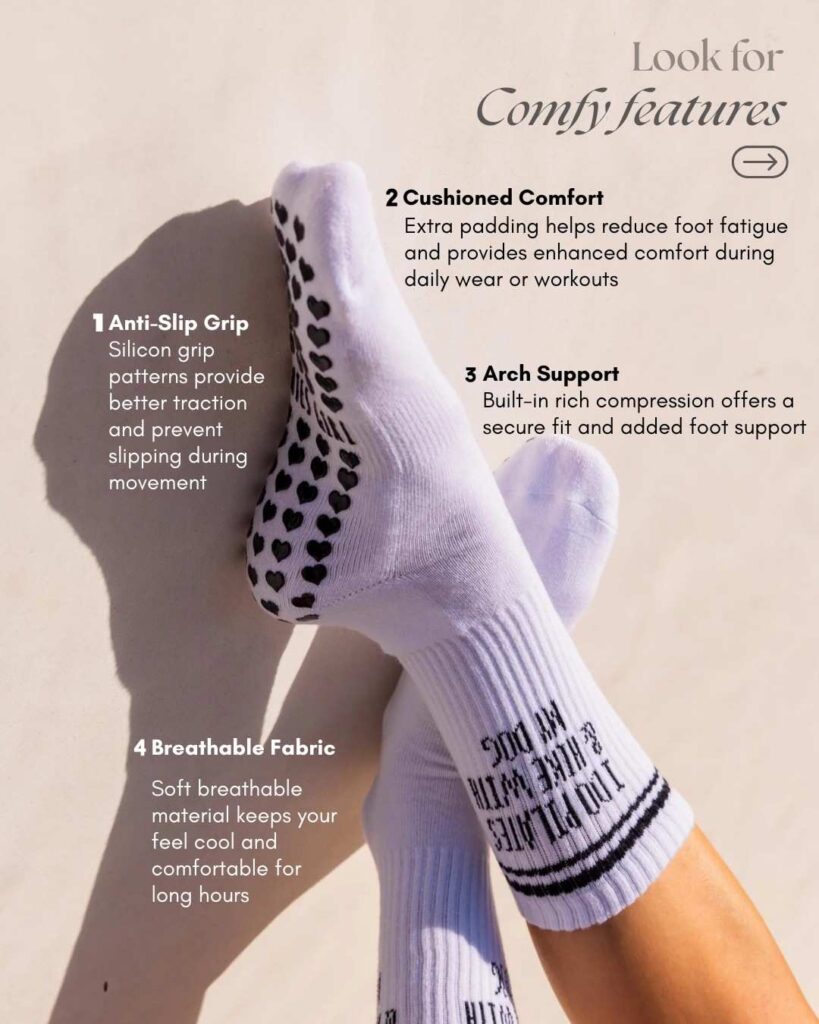
Comfort should never be compromised at any cost. So, when you are buying modern grip socks, considering these features is a must:
- Moisture wicking technology
- Cushioned soles
- Breathable mesh panels
- Arch compression support
- Seamless toe design
Selecting socks with appropriate cushioning and ventilation is important for making them more comfortable. Breathable athletic socks that prevent overheating due to air circulation are also favored by many individuals.
Selecting the Right Grip Socks Based on Your Activity
- For Yoga and Pilates: Choose grip socks with breathable fabrics and flexible grip patterns for better comfort and stability.
- For Sports Training: Always opt for high-durability sports grip socks with compression support to enhance performance and reduce fatigue.
- For Medical Use and Hospitals: Select socks with anti-slip soles to help improve safety and reduce the risk of falls.
- For Everyday Activities: Choose grip socks that offer a balanced combination of comfort, cushioning, and reliable traction.
Never ignore Durability when you are paying for your socks
It is a key factor when you are buying grip socks. Stretching, washing, and high-impact movement can easily wear out poor quality socks.
In order to ensure durability, check for:
- Fade resistant yarn
- Reinforced stitching
- Elastic retention after wash
- Strong toe and heel construction
- High quality grip materials
Know that it’s time to replace your grip socks when the pattern shows visible wear, and the yarn develops holes or excessive thinning. Also, when the elastic loses compression and you notice increased slipping inside your toes.
In a nutshell
Selecting the best grip socks will not be difficult once you consider factors such as advanced grip technology, good quality materials, size fitting, and durability. This is because your feet are the base for all movements and having good grip socks will improve your game.
To find the best pair of grip socks, certain considerations need to be taken into account. Be it compression grip socks, moisture-wicking grip socks, or breathable athletic socks, purchasing a good quality pair of grip socks is worth considering.
FAQs:
1. What are grip socks used for?
To enhance stability, traction, and safety during activities.
- Which material is best for grip socks?
Cotton is comfortable, polyester is for durability, and bamboo socks offer breathability and antibacterial properties.
- Are grip socks better than normal socks?
Yes, they can provide better stability, improve foot control, and reduce slipping compared to other socks.
- Can grip socks help prevent blisters?
Yes, fitted grip socks reduce foot movement and friction, which helps minimize blister formation.
- How do I wash grip socks properly?
Wash grip socks in cold water with mild detergent and avoid high heat drying.
- How long do grip socks last?
Most grip socks typically last between 3 to 12 months, with frequent use generally resulting in a lifespan of around 3 to 4 months.
Reach out at info@texcyle.co or Call Us Today+917982201014 and explore what Texcyle can do for your brand.