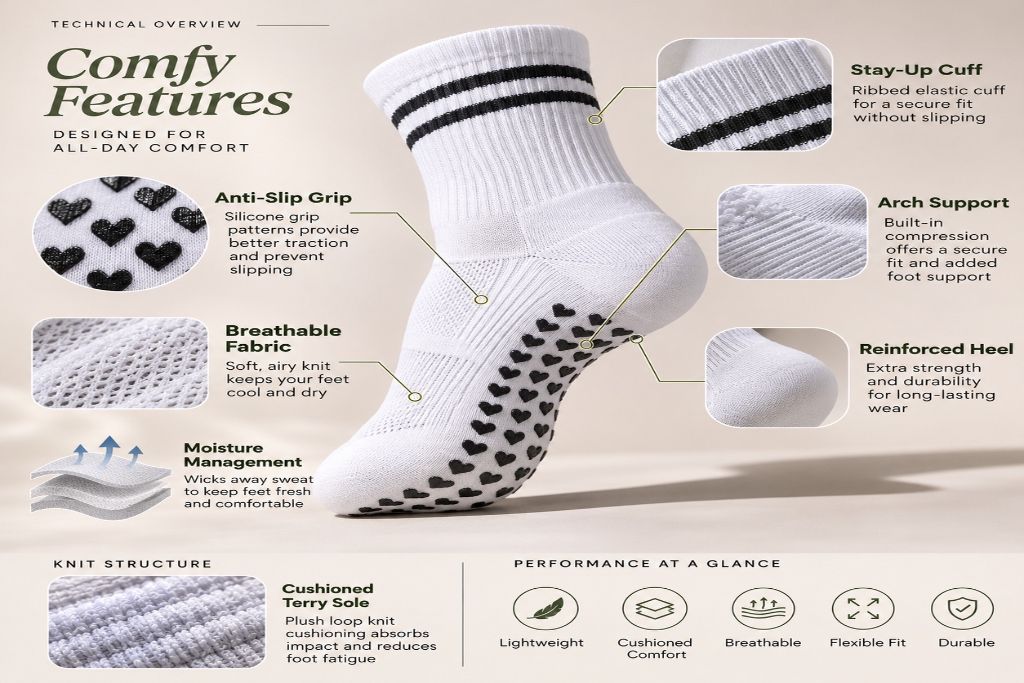
A sports sock is a pretty simple thing to look at but it’s actually the result of a number of interrelated design decisions. The yarn you use, where you put the cushioning, the way you knit it and the fit all have an effect on how it feels in the shoe. For performance sports socks that’s the challenge for the brand really, you’re trying to get the right balance of comfort, moisture management and durability without adding any extra bulk.
A running sock is a very different proposition to a cushioned training sock or a team sport sock. It’s absolutely vital to define the activity and the target customer first in order to then select the appropriate materials and construction.
Table of Contents
ToggleUnderstanding Performance Sports Socks
A running sock usually needs a close fit that limits movement inside the shoe. Gym styles may emphasise on underfoot comfort, while team-sport socks often provide longer coverage to work with uniforms and protective equipment. These differences should shape the product brief before selecting yarns or colours.
Importance of Cushioning in Sports Socks
Cushioning adds knitted thickness where the foot meets repeated pressure, commonly around the heel, forefoot and sole. More padding is not automatically better. A thick sole can reduce space inside a close-fitting shoe and increase warmth; targeted cushioning may be more suitable for a snug performance fit.
Assess samples with the intended footwear. Check for pressure, bunching and movement after walking or training. A sock that feels soft in the hand may behave differently inside a shoe.
Half-Terry vs Full-Terry Sock Construction
Terry knitting creates small loops that form a raised surface. Half-terry construction places these loops in selected areas, often under the foot. Full-terry extends them across a larger part of the sock.
Half-terry can add underfoot padding while keeping the upper lighter. Full-terry provides broader cushioning but may add bulk and warmth. The choice depends on the shoe, activity and climate. As manufacturers may interpret these terms differently, include a construction diagram or approved sample in the specification.
Moisture-Wicking and Breathable Yarn Technologies
Absorption and wicking describe different things. Absorption is the amount of moisture a material takes up, wicking is the movement of liquid through a textile. Cotton absorbs moisture, while polyester fibres absorb relatively little and are often used in yarns designed to move moisture across or away from the skin.
Knitting affects ventilation too. Mesh panels and open-knit zones can encourage airflow, although their benefit depends on placement and shoe fit. Avoid relying on labels such as quick-dry alone. NC State University’s Textile Protection and Comfort Centre describes methods for assessing liquid movement and moisture management in textiles.
Choosing the Right Yarn Blends for Sports Socks
Blends combine different fibre characteristics. Cotton can contribute softness and absorbency, polyester can reduce moisture held within the fibre, nylon adds strength in areas exposed to abrasion and elastane provides stretch to help the sock stay in place.
There is no single blend ratio for every sport. Consider the activity, target price, durability, care requirements and desired feel. Yarn quality and knitting density also affect the result, even when fibre percentages are identical.
Cotton, Bamboo, Polyester and Nylon: Yarn Comparisons
Each fibre brings different characteristics, and the final result depends on yarn, knit structure and finishing.
Cotton is familiar, soft and absorbent, but a cotton-rich sock may feel damp if perspiration accumulates.
Bamboo-derived viscose is often selected for its smooth hand feel, specifications should name the actual fibre rather than use bamboo as a catch-all term.
Polyester is widely used in moisture-management constructions.
Nylon is valued for strength and abrasion resistance.
Compare these fibres in the finished sock, not in isolation. Review fit, stretch recovery, surface wear and comfort after washing.
Compression, Arch Support and Reinforced Heel-Toe Designs
An elasticated arch zone can help the sock sit securely around the midfoot. It should feel supportive without creating excessive pressure. This is different from medically graded compression, which requires a separate specification and substantiation if a product makes that claim.
Reinforced heel and toe areas address frequent friction. Check that extra yarn does not create a bulky ridge or uncomfortable seam, particularly when the sock is worn with fitted sports footwear.
Popular Sports Sock Lengths, Styles and Designs
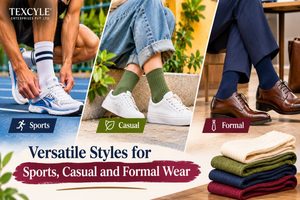
No-show, ankle, quarter, crew and knee-high styles offer different levels of coverage. The sport, footwear and uniform requirements should guide the choice. Crew lengths also provide more visible space for colour blocking, patterns and branding.
During sampling, check that the cuff stays in place without restricting the leg. Review sizing across the full range rather than approving only one sample size.
Customisation and Private Label Options for Sports Brands
A useful private-label brief should specify the sport, length, size range, fibre composition, knit construction, cushioning placement, branding position, labels and packaging. Artwork alone is not enough to define the product.
When evaluating a private-label sports socks manufacturer, ask how samples are developed, how revisions are recorded and what information is needed to assess feasibility. Confirm the availability of requested yarns and constructions directly.
Texcyle lists sock manufacturing, product development, customisation, packaging and labelling among its services. Its website identifies certified organic cotton, recycled polyester and bio-elastane among its working materials. Confirm the suitability and availability of a particular combination with the team.
Sourcing and Quality Standards for Performance Sports Socks
Approve samples against a written specification. Check fibre content, dimensions, stretch recovery, cushioning placement, toe closure and fit inside the intended shoe. Wear and wash the sample; this can reveal slippage, pilling, colour change or dimensional issues that a visual check may miss.
Agree quality checks and acceptance criteria before bulk production. Depending on the product, these may include colourfastness, abrasion resistance, pilling and dimensional change after washing. Confirm order quantities, sample charges, packaging, labelling and production schedules in writing. Keep an approved reference sample for repeat orders.
FAQs:
- What is the best yarn composition for performance sports socks?
There is no universal blend. Choose fibres according to activity, moisture needs, fit, durability and target price.
- Why is cushioning important in sports socks?
It adds padding in areas exposed to repeated pressure, particularly the heel and forefoot.
- Which sock construction is better for sports: half-terry or full-terry?
Half-terry provides targeted padding; full-terry offers broader cushioning. Footwear fit and activity should guide the choice.
- What should brands consider when sourcing custom sports socks?
Review fibre content, construction, fit, sample testing, quality criteria, order quantities, timelines and branding requirements.
A clear specification helps a manufacturer assess the product and identify details that need sampling. To discuss custom or private-label sock development, contact Texcyle.
Connect with the team directly at +91 79822 01014 and request a Quote Today!