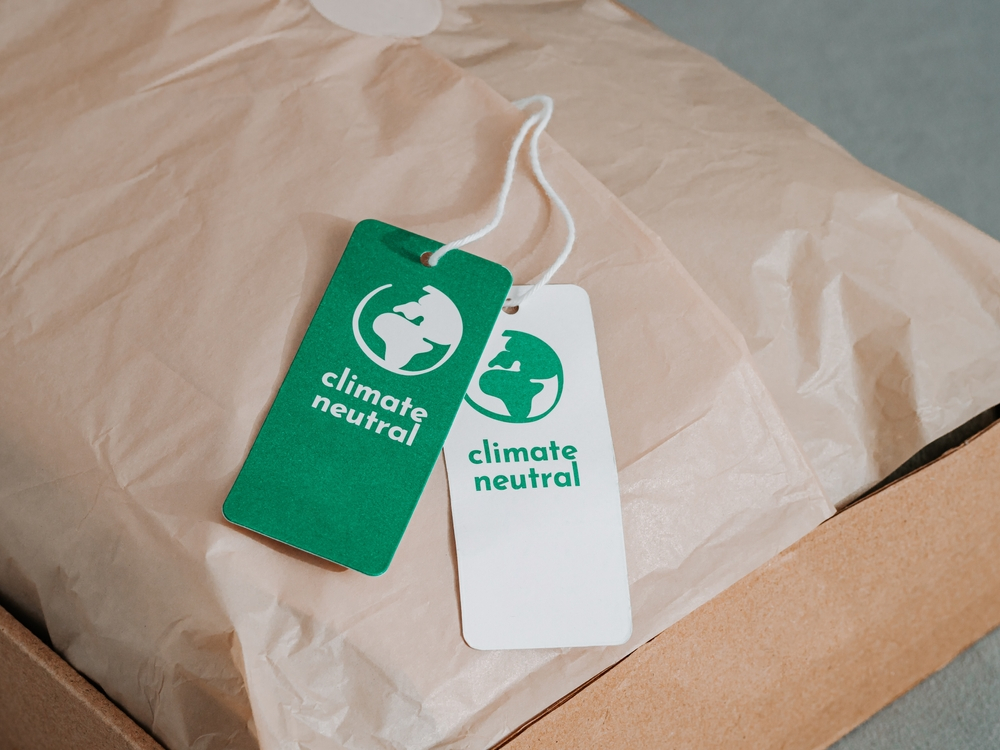
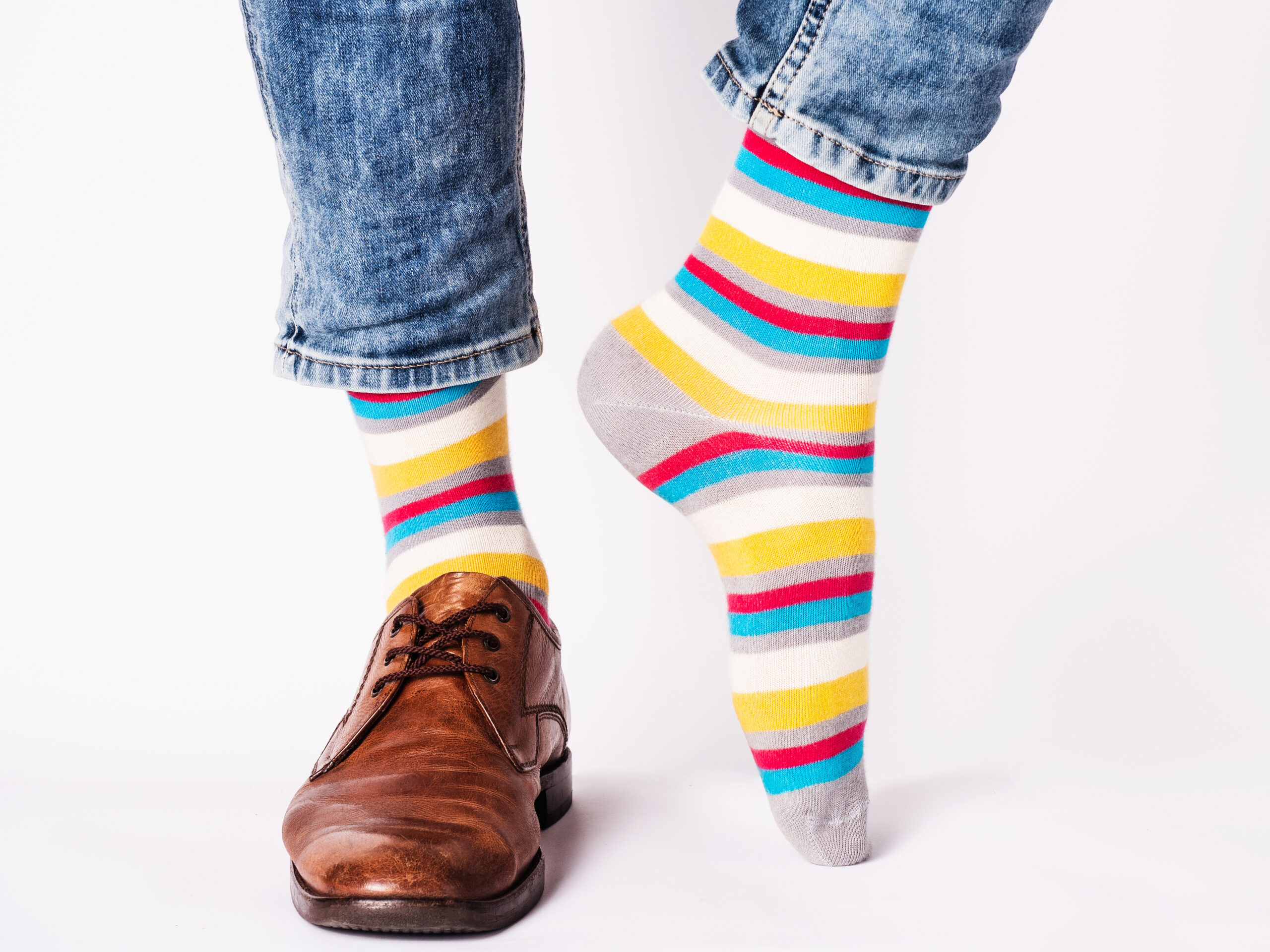
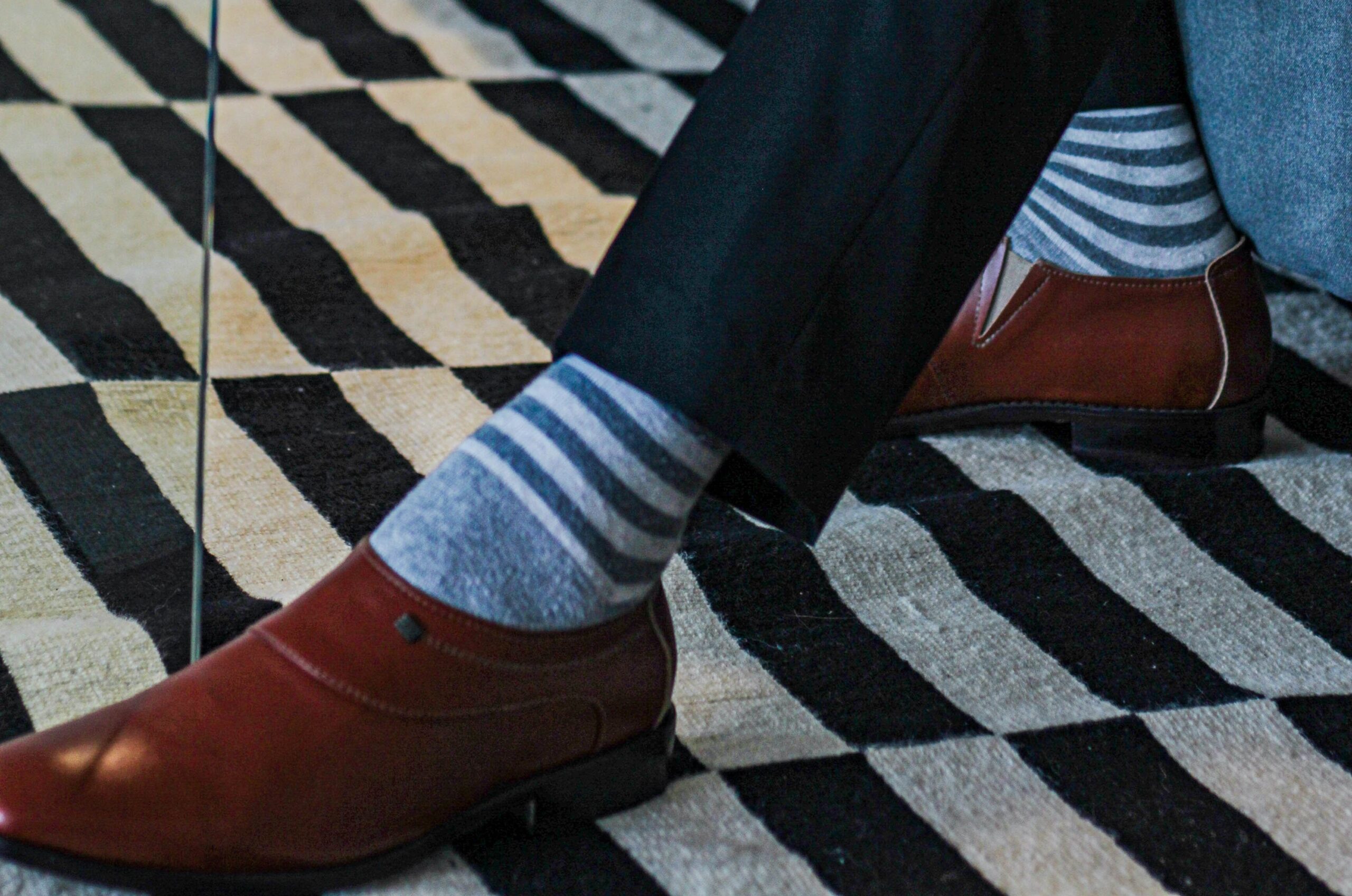
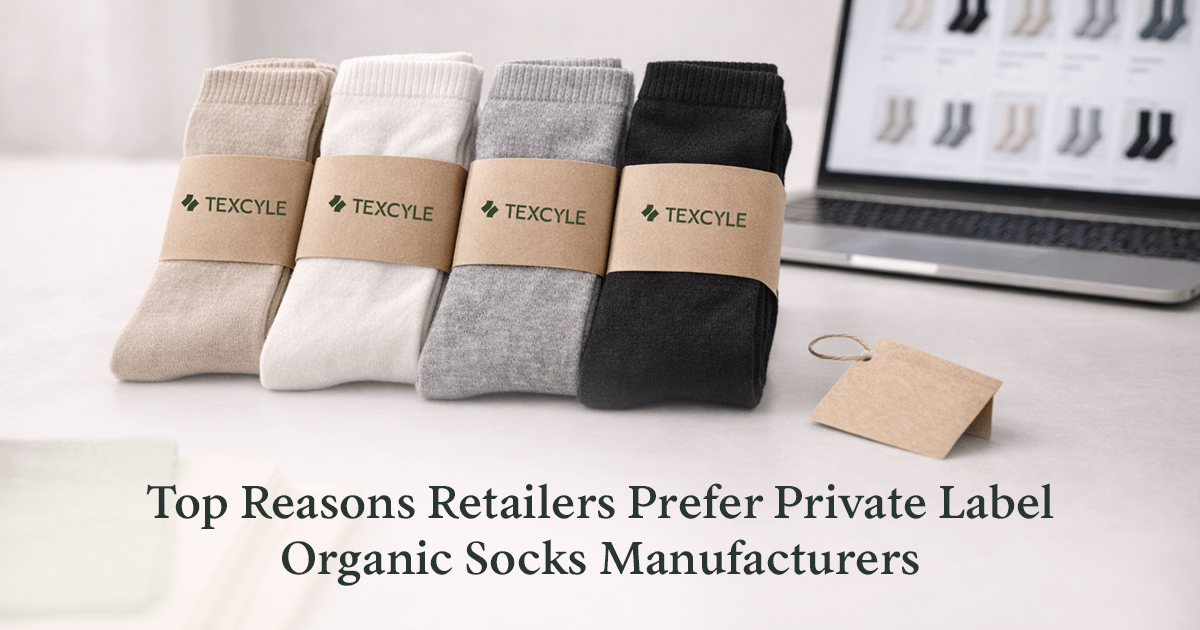
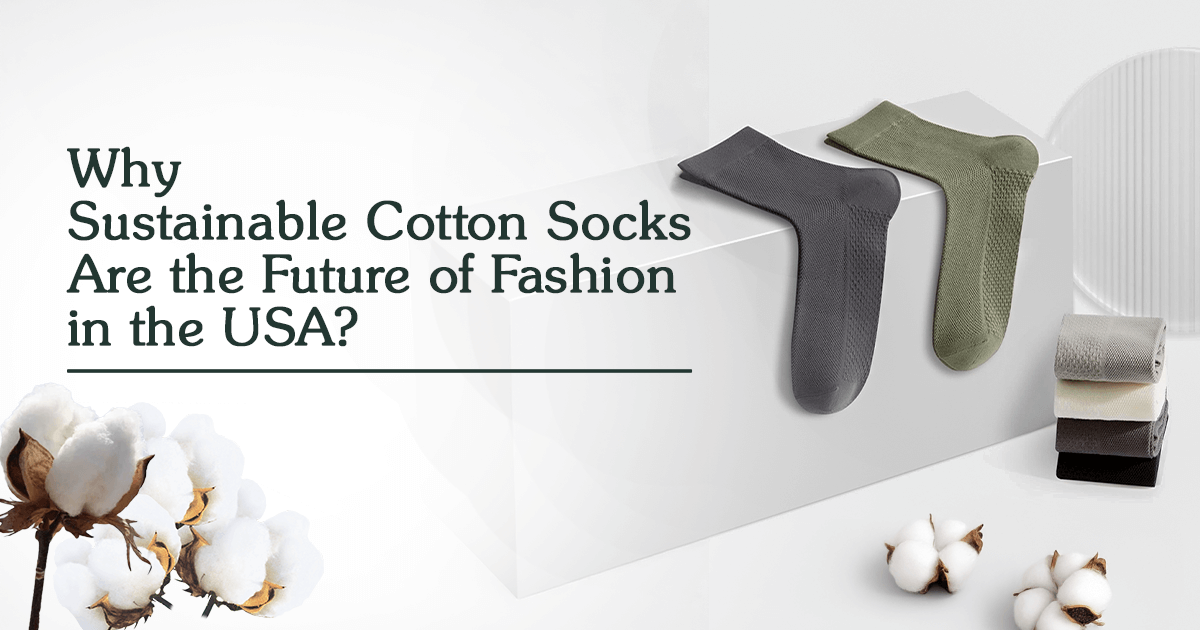
In today’s world, sustainability is no longer a trend—it’s a business standard. Brands that care about people and the planet are rethinking every product they offer, and socks are no exception. From startup streetwear labels to wellness retailers and sports brands, Merchandise Socks made from organic cotton are becoming a top choice for ethical merchandising. At Texcyle, we’ve seen firsthand how this shift is transforming the custom socks market.
Let’s explore why organic cotton socks are rising fast and what that means for brands looking to stand out responsibly.
1. What Organic Socks Supplier Truly Means
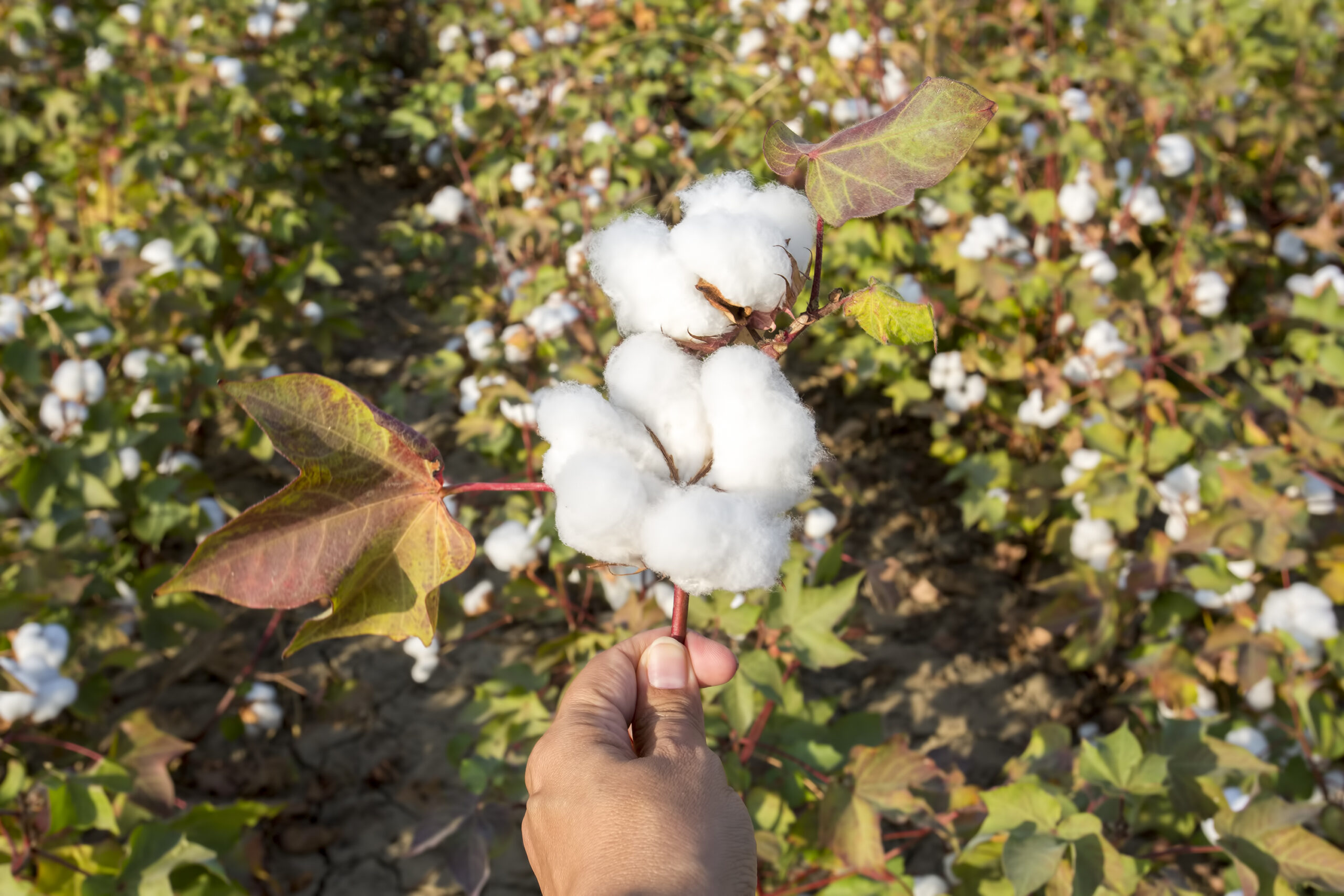
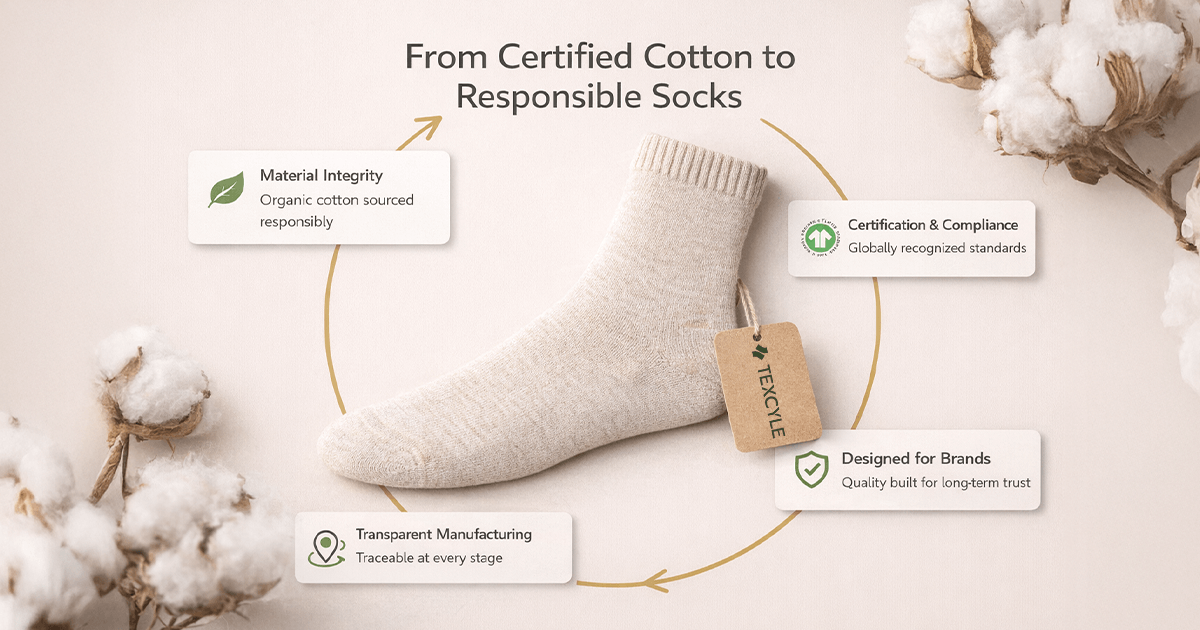
An organic socks supplier doesn’t just sell socks made from cotton. It means the cotton is grown without harmful pesticides, the processing avoids toxic dyes, and ethical labor practices are followed. A true supplier ensures transparency across the supply chain—from farm to finished Merchandise Socks.
2. Why Organic Socks Are a Premium Wholesale Category
Organic socks fall into a premium segment because of higher-quality raw materials, cleaner production methods, and strong consumer trust. For brands, offering premium Merchandise Socks signals responsibility, quality, and long-term value rather than fast fashion.
3. Core Benefits of Organic Fibres Over Conventional Ones
Organic cotton fibres are softer, more breathable, and hypoallergenic. They’re better for sensitive skin and hold up well after repeated washes. Compared to conventional cotton, organic fibres reduce water pollution, protect soil health, and lower carbon impact—making your Merchandise Socks both planet-friendly and customer-loved.
4. European Certification Standards Buyers Trust
Certifications like GOTS (Global Organic Textile Standard) and OEKO-TEX® are gold standards for buyers. These labels prove your socks meet strict environmental and social criteria. Working with a trusted Merchandise Organic Socks Supplier in Russia helps ensure compliance with these certifications, especially for brands targeting European markets.
5. How to Identify a Reliable Organic Socks Supplier
Look for suppliers who:
- Share clear certification documents
- Offer full traceability of cotton sourcing
- Provide low MOQ options for startups
- Maintain consistent quality control
- Support custom branding for Merchandise Socks
A reliable partner like Texcyle focuses on long-term collaboration rather than one-time transactions.
6. Pricing Logic: Why Organic Socks Cost More
Organic cotton farming yields less per acre and requires more manual care. Add eco-friendly dyes, fair wages, and certification fees, and production costs naturally rise. However, these higher costs are balanced by stronger brand value and higher resale prices for your Merchandise Socks.
7. Benefits for Retailers: Higher Margins & Brand Prestige
Retailers selling organic socks often enjoy better margins because customers are willing to pay more for ethical products. Plus, positioning your brand around sustainability boosts credibility, customer loyalty, and long-term growth in the Merchandise Socks market.
8. Popular Organic Sock Styles & Where They Are Used Daily
Some of the most popular organic sock styles include:
- Crew socks for casual wear
- Ankle socks for sports and fitness
- Compression socks for wellness retail
- Dress socks for office and gifting
- Cozy lounge socks for home comfort
These versatile styles make organic Merchandise Socks ideal for everyday use across lifestyle, fashion, and wellness brands.
9. The Role of Organic Socks in Sports and Wellness Retail
Athletes and wellness-focused consumers prefer breathable, sweat-absorbing, chemical-free socks. Organic cotton fits perfectly into yoga studios, gyms, health stores, and sports merch collections. It’s no surprise that many sports brands now prioritize Merchandise Socks made from organic fibres.
10. Customer Case Study: A Success Story
A boutique fitness brand in Moscow partnered with Texcyle to launch a line of organic Merchandise Socks. They focused on minimalist design, eco-packaging, and clear sustainability messaging. Within three months, their socks became their best-selling merch item, with repeat orders increasing by 40%. Their collaboration with a Merchandise Organic Socks Supplier in Russia helped them tap into a fast-growing ethical consumer base.
FAQ
1. What makes organic socks different from regular cotton socks?
Organic socks use cotton grown without harmful chemicals and follow eco-friendly processing methods, making them safer for skin and the environment.
2. Are organic socks more expensive?
Yes, they usually cost more due to ethical farming, certifications, and sustainable manufacturing—but they also offer higher resale value.
3. Which certifications prove that socks are truly organic?
GOTS and OEKO-TEX® are the most trusted certifications in the industry.
4. Can I order organic socks with my brand’s logo or custom packaging?
Absolutely. Most suppliers, including Texcyle, offer full customization for Merchandise Socks.
5. How is the demand for organic socks growing in Russia?
Demand is rising steadily as consumers become more eco-conscious, making partnerships with a Merchandise Organic Socks Supplier Russia a smart move.
The rise of organic cotton socks isn’t just a fashion shift—it’s a movement toward ethical branding and responsible retail. By choosing organic Merchandise Socks, brands can boost credibility, increase margins, and contribute to a healthier planet.
At Texcyle, we specialize in sustainable custom socks that combine comfort, style, and ethics.
Email us at info@texcyle.co or Call Us Today +917982201014 to start your organic merchandise journey today.